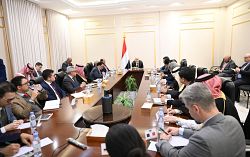
رئيس مجلس القيادة يحث المجتمع الدولي على المساهمة في ترجمة القرارات السيادية الى اجراءات عملية داخل مجلس الأمن
التقى فخامة الرئيس الدكتور رشاد محمد العليمي، رئيس مجلس القيادة الرئاسي، اليوم الثلاثاء، سفراء الدول الراعية للعملية السياسية في اليمن، وذلك بحضور وزير الخارجية وشؤون المغتربين الدكتور شائع الزنداني.

يونيسيف: عام 2025 كان الأسوأ لملايين الأطفال بسبب الجوع والحروب
قالت منظمة الأمم المتحدة للطفولة "يونيسيف" إن الجوع والحروب والأمراض شكلت حياة ملايين الأطفال خلال عام 2025.

مؤشرا البحرين العام والإسلامي يقفلان على تباين
أقفل مؤشر البحرين العام، اليوم، عند مستوى 2,077.10 بارتفاع وقدره 11.97 نقطة عن معدل الإقفال السابق.
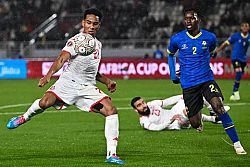
كأس أمم إفريقيا: المنتخب التونسي يتأهل للدور ثمن النهائي بعد تعادله مع نظيره التنزاني إيجابا
تأهل المنتخب التونسي للدور ثمن النهائي من بطولة كأس أمم إفريقيا لكرة القدم في نسختها الخامسة والثلاثين المقامة بالمغرب، وذلك بعد تعادله مع نظيره التنزاني بهدف لمثله اليوم في ختام مباريات المجموعة الثالثة من البطولة.
آخر تحديث: ،
2025/12/31
الساعة
04:30:57
آخر الأخبار:
 قطر: نجدد دعمنا لوحدة اليمن وسلامة أراضيه وأمن السعودية جزء لا يتجزأ من أمن قطر
مملكة البحرين تجدد موقفها الداعم للمبادرات الرامية لحفظ وحدة اليمن وسيادته وسلامة أراضيه
دولة الكويت تؤكد ضرورة الحفاظ على وحدة اليمن وسلامة أراضيه
مصر تؤكد ثقتها في التعامل بحكمة مع التطورات في اليمن والحرص على تحقيق الاستقرار والحفاظ على سيادته
سلطنة عُمان تؤكد على أهمية احترام سيادة الجمهورية اليمنية وأمنها واستقرارها
آخر الأخبار:
قطر: نجدد دعمنا لوحدة اليمن وسلامة أراضيه وأمن السعودية جزء لا يتجزأ من أمن قطر
مملكة البحرين تجدد موقفها الداعم للمبادرات الرامية لحفظ وحدة اليمن وسيادته وسلامة أراضيه
دولة الكويت تؤكد ضرورة الحفاظ على وحدة اليمن وسلامة أراضيه
مصر تؤكد ثقتها في التعامل بحكمة مع التطورات في اليمن والحرص على تحقيق الاستقرار والحفاظ على سيادته
سلطنة عُمان تؤكد على أهمية احترام سيادة الجمهورية اليمنية وأمنها واستقرارها
President al-Alimi urges international community to help translate sovereign decisions into practical measures within the Security Council
[30/12/2025 08:51]

RIYADH-SABA
His Excellency President Dr. Rashad al-Alimi, Chairman of the Presidential Leadership Council (PLC) met today, Tuesday, with the Ambassadors of the countries sponsoring the political process in Yemen.
The meeting aimed to discuss the latest developments in the Yemeni national arena, namely in the eastern governorates, which necessitated taking a series of firm constitutional and legal decisions and measures to protect the security of citizens, preserve Yemen's unity, sovereignty, stability and territorial integrity, and maintain the state's legal position.
The President restated that these developments were not an internal political dispute, but rather a threat to the unity of military and security decision-making, an undermining of the legal standing of the state and a reproduction of the logic of parallel authorities rejected by the international community in all its statements and resolutions.
He recounted all the commendable efforts and initiatives undertaken throughout the past period to achieve calm, de-escalate tensions and contain the repercussions of the unilateral military measures taken by the Southern Transitional Council (STC) in Hadhramaut and al-Mahra governorates outside the frameworks of the transitional phase, without the approval of the PLC or coordination with the Coalition leadership, noting that all these efforts were met with obstruction.
The President made clear that, in his capacity as the Commander-in-Chief of the Armed Forces, he explicitly ordered to stop any military movements outside the framework of the state. A three-phase plan for the gradual repositioning of the Homeland Shield forces was approved, of which two phases have already been implemented.
He said, "We created a high-level communication committee to contain the escalation and open channels of dialogue, but unfortunately, these efforts were also met with obstruction and insistence on proceeding with unilateral measures."
He stressed that this confirms that the problem was never a lack of solutions, but a deliberate obstruction of them.
The President refuted the misleading narratives aimed at justifying the imposition of a fait accompli by force under the pretext of combating terrorism, stressing that fighting terrorism is a state decision, not a political excuse.
He noted that Yemeni military and security institutions have, in recent years, with the support of their partners, achieved documented acheivements in dismantling terrorist cells, cutting off their funding sources, securing cities and vital corridors, and combating arms and drug smuggling.
He added, therefore, that the issue of terrorism cannot be used to justify military actions outside the framework of the state or to undermine its legitimate institutions.
The President reaffirmed the principled and consistent stance on resolving the Southern issue, in a just manner according to any options decided by the free will of the people. However, he firmly rejected imposing this solution by force of fact or by arms.
He stated that reducing the Southern issue to exclusive representation or military movements harms its fairness, undermines the chances of a sustainable political solution, and affects the people of the South more than anyone else.
The President explained that this stance aligns with what our brothers in the Kingdom of Saudi Arabia have confirmed, that the Southern issue is a just cause with its historical and social dimensions, and can only be resolved at the negotiating table within a comprehensive political solution.
The President touched on the Emirati role in the recent developments in the eastern governorates, saying, 'We do not deny the previous role of the UAE, nor its contributions in earlier stages, but he emphasized that what we need today is clarity and refraining from supporting a component that has deviated from the consensus mechanisms that the UAE itself sponsored within the Coalition to Support Legitimacy.'
He explained "When the Coalition to Support Legitimacy, of which we are a part, announces that there is Emirati pressure to push local forces to take military action, and that this poses a threat to Yemeni and Saudi national security and contradicts the principles on which the coalition was founded, it is my duty as the head of a UN member state to deal with this matter with the utmost seriousness and responsibility".
The Chairman of the PLC called on the countries sponsoring the political process in Yemen to take a unified and explicit international stance that rejects unilateral measures, supports the decisions of the Yemeni state and the de-escalation efforts led by the Kingdom of Saudi Arabia.
He also called for political and legal pressure to enable the legitimate government to exercise its exclusive authorities and implement the resolutions of today within the Security Council and international forums, in accordance with international law.


Key words:
responsibility" - constitutional - representation - contributions - repositioning - unfortunately - international - comprehensive - communication - repercussions -
رئيس مجلس القيادة يحث المجتمع الدولي على المساهمة في ترجمة القرارات السيادية الى اجراءات عملية داخل مجلس الأمن
مجلس الدفاع الوطني يبارك القرارات الرئاسية لحماية المدنيين وإنهاء التواجد الاماراتي في البلاد
قرار رئاسي بإخراج دولة الإمارات من اليمن
قرار جمهوري بإعلان حالة الطوارئ
رئيس مجلس القيادة: عازمون على حماية المدنيين وتصحيح مسار الشراكة ضمن تحالف دعم الشرعية
رئيس مجلس القيادة يثمن عاليا استمرار جهود الوساطة السعودية الإماراتية من اجل خفض التصعيد في المحافظات الشرقية
رئيس مجلس القيادة يثمن الاستجابة العاجلة لتحالف دعم الشرعية من اجل حماية المدنيين في حضرموت
رئيس مجلس القيادة يرأس اجتماعا طارئا لمجلس الدفاع الوطني
رئيس مجلس القيادة يهنئ بذكرى استقلال ليبيا
رئيس مجلس القيادة يبارك الانفراجة الجديدة في الملف الانسانيالأكثر قراءة

مؤتمر الحوار الوطني
-
رئيس مجلس القيادة الرئاسي يلتقي المديرة العامة لصندوق النقد الدولي
[ 18/09/2023 ]
-
رئيس الجمهورية يرأس اجتماعا للجنة تحديد الأقاليم
[ 08/05/2015 ]
-
لجنة تحديد الأقاليم تستمع الى دراسات عن التحديد الإداري وتقسيم الموارد ومعايير اختيار العاصمة ومقومات عدن الاقتصادية
[ 08/05/2015 ]
-
جمعية الابداع بالجوف تختتم انشطتها التوعوية لدعم مخرجات الحوار
[ 08/05/2015 ]
