Member of PLC al-Khanbashi Launches Yemeni Cultural Summit in Mukalla
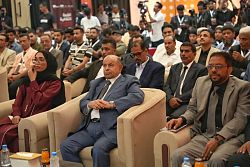
Member of the Presidential Leadership Council Salem al-Khanbashi, the Governor of Hadramout, inaugurated the Yemeni Cultural Summit in Mukalla on Saturday and officially opened the Arts Zone project, implemented by the Hadramout Foundation for Culture with joint funding from the European Union, the British Council, and UNESCO.
Death Toll from Israeli Offensive in Gaza Rises to 72,757, with 172,645 Injured
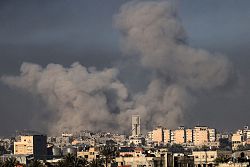
Medical sources in Gaza Strip said the death toll from the Israeli military offensive on the territory has risen to 72,757, while the number of wounded has reached 172,645 since the outbreak of the war on October 7, 2023.

Oil price tops $100 a barrel
Oil prices jumped above $100 per barrel today, Monday, as the U.S. Navy prepares to take control of ship movements in the Strait of Hormuz.

Inter Milan a win away from Serie A title
Inter Milan continued its successful march to reclaim the Italian football league title, despite drawing with its host Torino (2-2), in the conclusion of the 34th round of the competition.
Last Update: ،
2026/05/17
Time
06:43:50
Latest News:
 Al-Khanbashi Reviews Preparations for Government-Local Partnership Conference and Fuel Supply in Hadramout
President al-Alimi: Dealing with Houthis as Authority of Fait Accompli Means Legitimizing Divine Right, ..
Yemen’s Higher Education Minister Explores Academic Ties with Somalia, Libya
Economic Council Addresses Yemen’s Financial Crisis and Service Shortfalls
Breakthrough Deal Reached to Free 1,750 Detainees in Yemen
Latest News:
Al-Khanbashi Reviews Preparations for Government-Local Partnership Conference and Fuel Supply in Hadramout
President al-Alimi: Dealing with Houthis as Authority of Fait Accompli Means Legitimizing Divine Right, ..
Yemen’s Higher Education Minister Explores Academic Ties with Somalia, Libya
Economic Council Addresses Yemen’s Financial Crisis and Service Shortfalls
Breakthrough Deal Reached to Free 1,750 Detainees in Yemen
President al-Alimi Affirms Strict Commitment to Enforcing Sovereign Decisions, Warns of Rebellion against Yemen’s, Region’s Security
[31/12/2025 02:20]
RIYADH – SABA
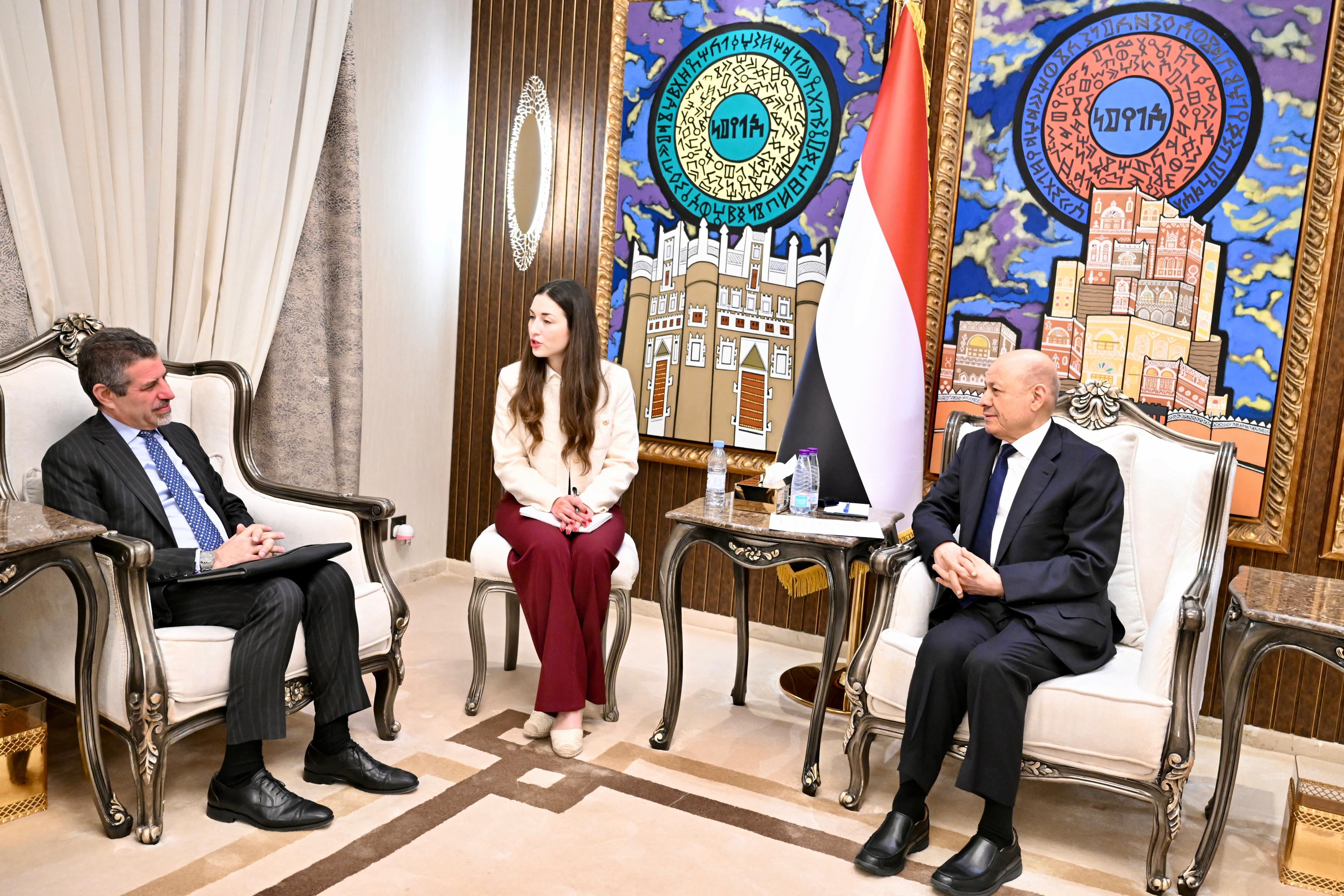
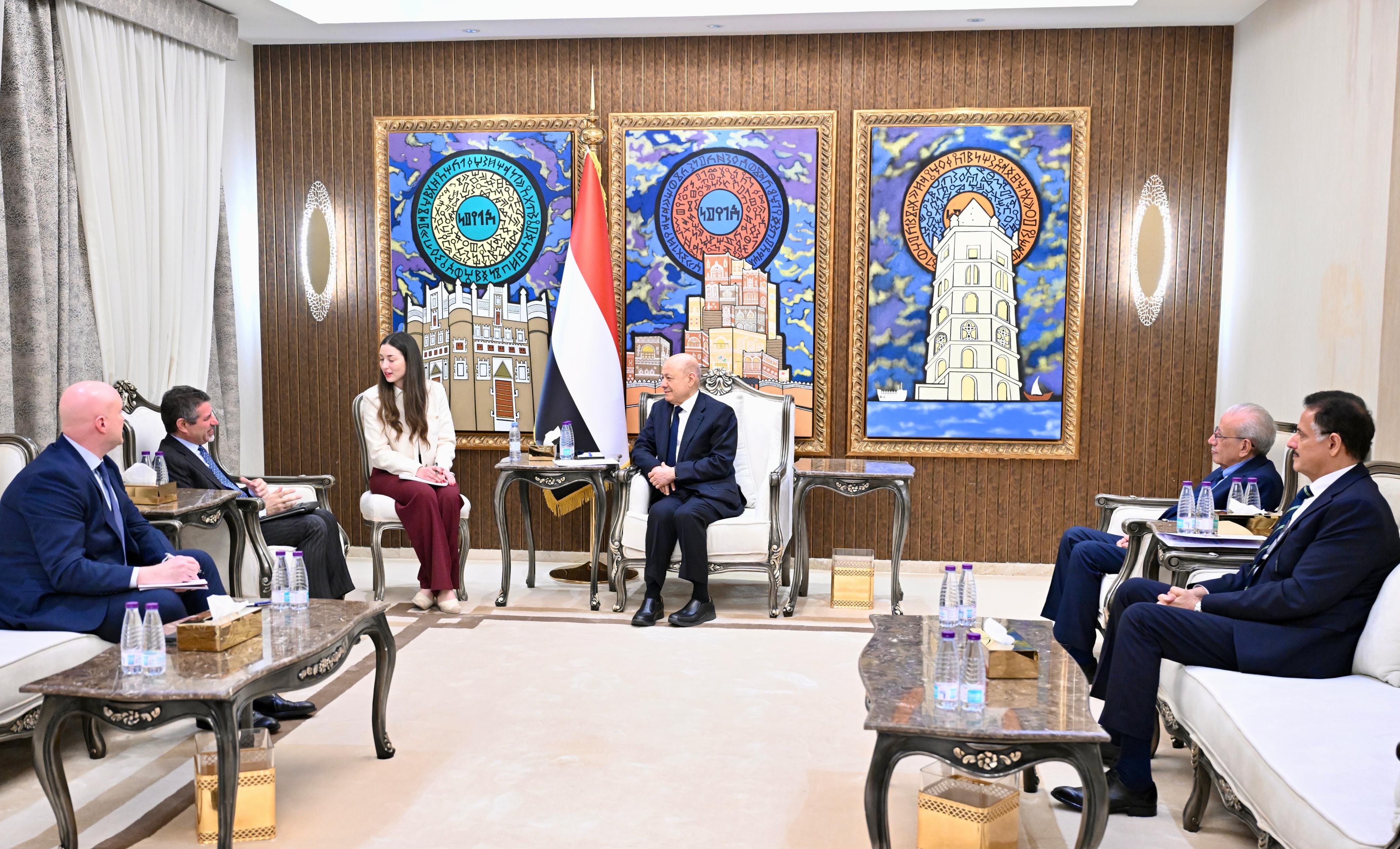
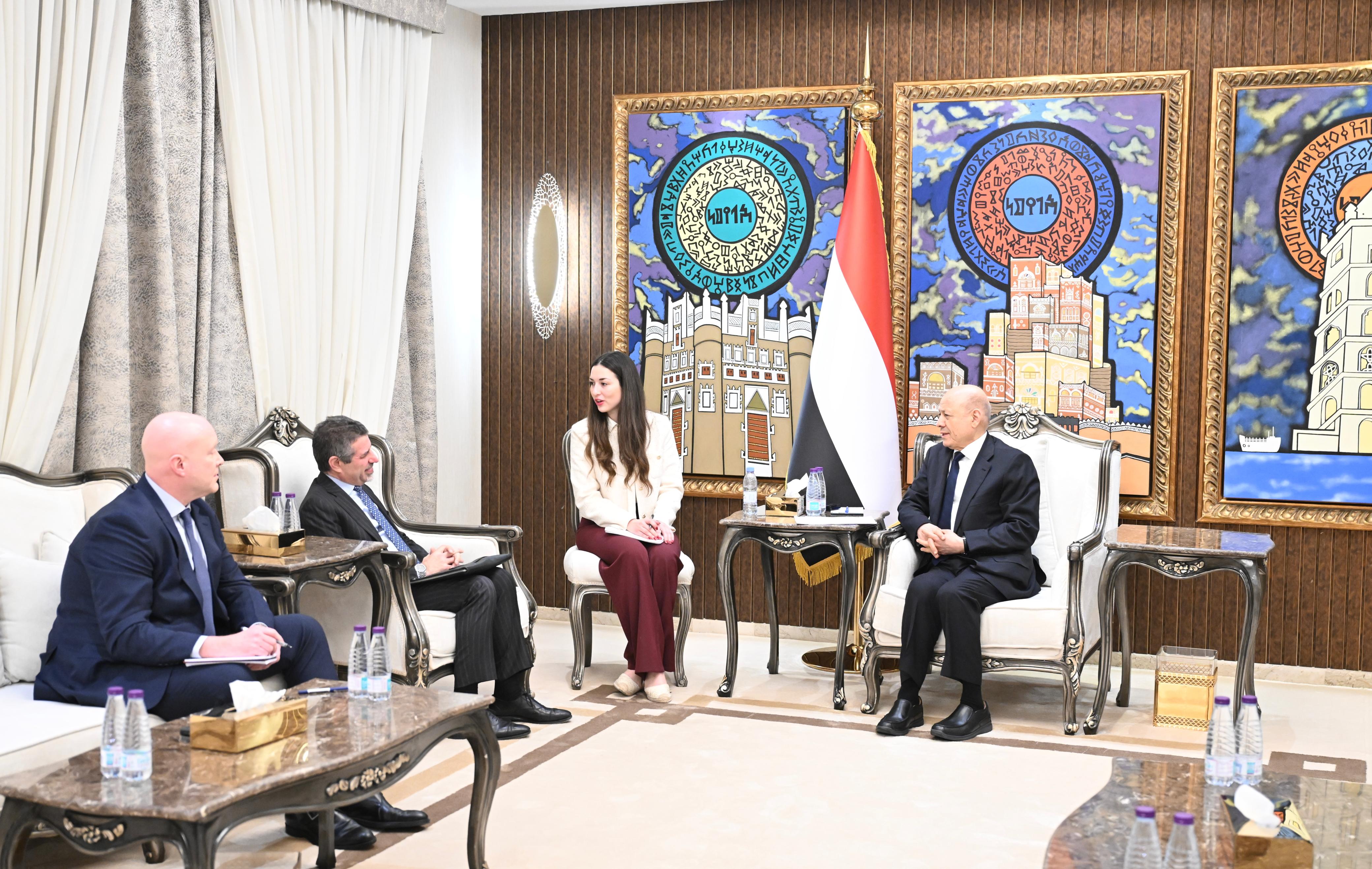
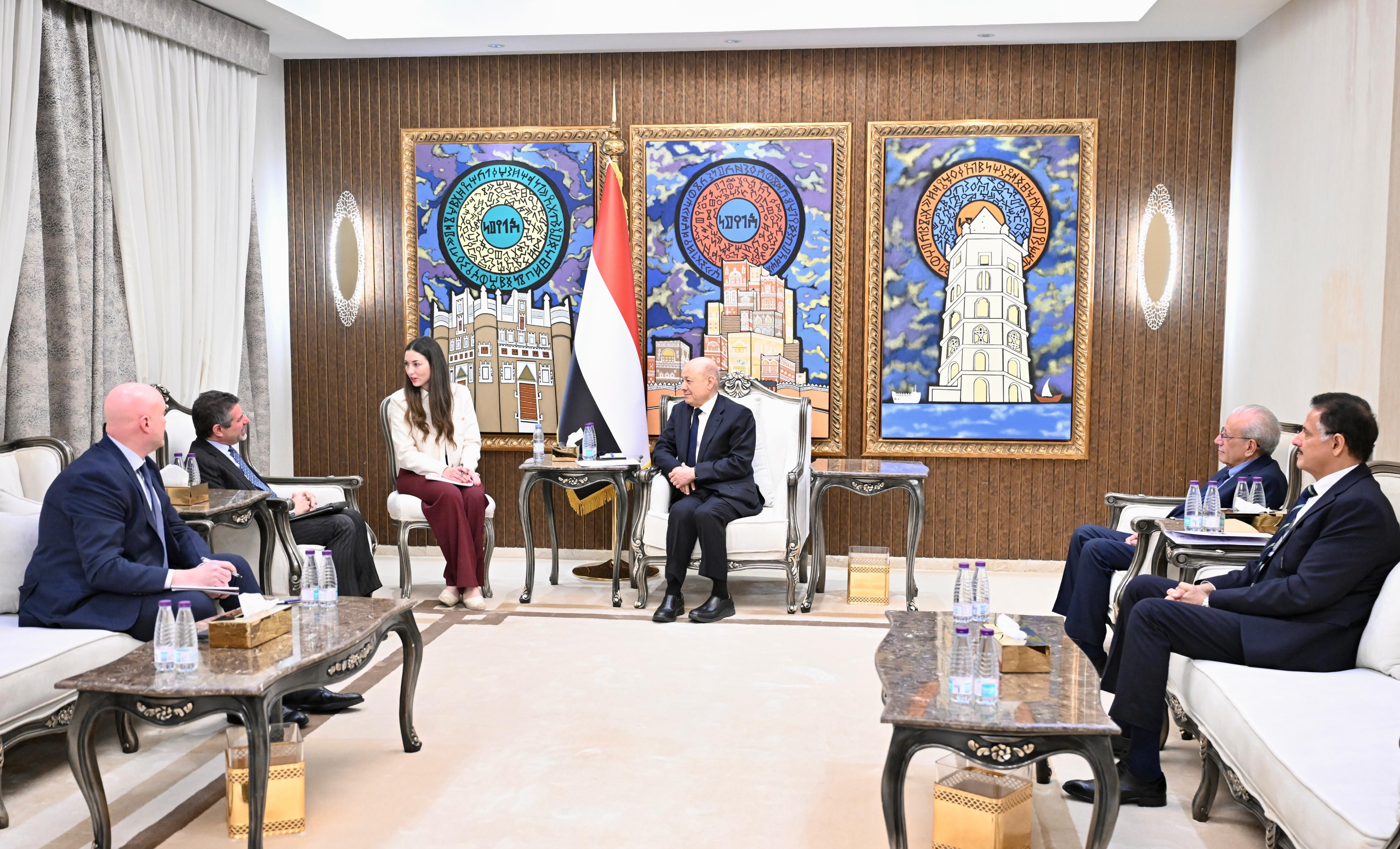
His Excellency President Dr. Rashad Mohammed al-Alimi, the Chairman of the Presidential Leadership Council, received Wednesday Ambassador of the United States of America to Yemen Steven Fagin.
The meeting discussed latest developments in the country and their economic and security implications in light of recent developments in the governorates of Hadhramawt and al-Mahrah.
He expressed his appreciation for the partnership with the United States and Washington’s pivotal role in supporting the security and stability of Yemen and the region, and in deterring intertwined terrorist threats.
President al-Alimi explained that the challenges facing the state today do not fall within the scope of political differences, but rather constitute an armed rebellion against the authority of the state, its sovereign decisions and the references of the transitional phase.
This has created a dangerous gap that threatens to turn Yemen into a hub of broad regional instability and to undermine the progress achieved in security and stability tracks at all levels.
The President noted that this rebellion has had a direct impact on the priorities of the international community in Yemen, led by confronting the terrorist Houthi militias backed by the Iranian regime, combating Al-Qaeda and ISIS, protecting the security of maritime passages and energy supplies, and safeguarding the security of neighboring countries.
He affirmed that the continuation of these unilateral measures has enabled the Houthi militias to re-mobilize and has created a conducive environment for the return of terrorist groups after they had been at their weakest.
In this context, President al-Alimi stressed that combating terrorism is a sovereign decision of the state of Yemen exercised by its competent institutions.
The forces of Yemen, with the support of the United States and regional and international partners, have achieved tangible successes in this file.
He warned against using this banner as a pretext to justify imposing a fait accompli by force or undermining state institutions.
The Chairman of the Presidential Leadership Council reviewed the efforts made by the presidency to avoid escalation led by his explicit directives to prevent any military movements outside the framework of the state, the approval of a national plan for redeployment in Wadi Hadramawt—of which only one phase remains—and the formation of a high-level communication committee after exhausting all channels of dialogue, in addition to the obstruction by the Southern Transitional Council and its allies of meetings of the Presidential Leadership Council and the work of the government.
He pointed out that the recent presidential decisions were taken as a peaceful means to protect civilians, halt violations, and support the de-escalation efforts led by the brotherly Kingdom of Saudi Arabia, based on the constitution and the exclusive powers of the Chairman of the Presidential Leadership Council—foremost among them the supreme command of the armed forces and the declaration of a state of emergency—pursuant to the Declaration of Transfer of Power and the rules governing the Council’s work, and following intensive consultations with relevant advisory bodies.
He clarified that these decisions were not a political option, but a constitutional necessity to protect the state and citizens and to restore security and stability.
The Chairman of the Presidential Leadership Council renewed the state’s commitment to a fair solution to the Southern Issue, as a just cause with its historical and social dimensions, according to options determined by the free popular will, while rejecting the imposition of any solution by force of arms or its reduction to exclusive representation.
He warned that hijacking the Southern Issue undermines its justice and leads to a prolonged conflict.
The President also affirmed the Republic of Yemen’s appreciation for the role previously played by the United Arab Emirates, but stressed at the same time that supporting any components outside the framework of the law in a manner that harms the legal standing of the state and the existing consensus constitutes a clear violation of the references of the transitional phase, the foundations of the Coalition to Support Legitimacy, and the opportunity to direct efforts toward the real enemy that has caused all this devastation.
He further emphasized the urgent need for a collective international stance to condemn and deter the threats that ignited this crisis, and to support Yemenis’ aspirations to end the war and restore the national state institutions they deserve.
For his part, the U.S. Ambassador renewed his country’s support for Yemen’s unity, security and stability, and its keenness to continue working with the Yemeni leadership and its regional and international partners to achieve comprehensive and just peace and to end the prolonged suffering of the Yemeni people.
His Excellency President Dr. Rashad Mohammed al-Alimi, the Chairman of the Presidential Leadership Council, received Wednesday Ambassador of the United States of America to Yemen Steven Fagin.
The meeting discussed latest developments in the country and their economic and security implications in light of recent developments in the governorates of Hadhramawt and al-Mahrah.
He expressed his appreciation for the partnership with the United States and Washington’s pivotal role in supporting the security and stability of Yemen and the region, and in deterring intertwined terrorist threats.
President al-Alimi explained that the challenges facing the state today do not fall within the scope of political differences, but rather constitute an armed rebellion against the authority of the state, its sovereign decisions and the references of the transitional phase.
This has created a dangerous gap that threatens to turn Yemen into a hub of broad regional instability and to undermine the progress achieved in security and stability tracks at all levels.
The President noted that this rebellion has had a direct impact on the priorities of the international community in Yemen, led by confronting the terrorist Houthi militias backed by the Iranian regime, combating Al-Qaeda and ISIS, protecting the security of maritime passages and energy supplies, and safeguarding the security of neighboring countries.
He affirmed that the continuation of these unilateral measures has enabled the Houthi militias to re-mobilize and has created a conducive environment for the return of terrorist groups after they had been at their weakest.
In this context, President al-Alimi stressed that combating terrorism is a sovereign decision of the state of Yemen exercised by its competent institutions.
The forces of Yemen, with the support of the United States and regional and international partners, have achieved tangible successes in this file.
He warned against using this banner as a pretext to justify imposing a fait accompli by force or undermining state institutions.
The Chairman of the Presidential Leadership Council reviewed the efforts made by the presidency to avoid escalation led by his explicit directives to prevent any military movements outside the framework of the state, the approval of a national plan for redeployment in Wadi Hadramawt—of which only one phase remains—and the formation of a high-level communication committee after exhausting all channels of dialogue, in addition to the obstruction by the Southern Transitional Council and its allies of meetings of the Presidential Leadership Council and the work of the government.
He pointed out that the recent presidential decisions were taken as a peaceful means to protect civilians, halt violations, and support the de-escalation efforts led by the brotherly Kingdom of Saudi Arabia, based on the constitution and the exclusive powers of the Chairman of the Presidential Leadership Council—foremost among them the supreme command of the armed forces and the declaration of a state of emergency—pursuant to the Declaration of Transfer of Power and the rules governing the Council’s work, and following intensive consultations with relevant advisory bodies.
He clarified that these decisions were not a political option, but a constitutional necessity to protect the state and citizens and to restore security and stability.
The Chairman of the Presidential Leadership Council renewed the state’s commitment to a fair solution to the Southern Issue, as a just cause with its historical and social dimensions, according to options determined by the free popular will, while rejecting the imposition of any solution by force of arms or its reduction to exclusive representation.
He warned that hijacking the Southern Issue undermines its justice and leads to a prolonged conflict.
The President also affirmed the Republic of Yemen’s appreciation for the role previously played by the United Arab Emirates, but stressed at the same time that supporting any components outside the framework of the law in a manner that harms the legal standing of the state and the existing consensus constitutes a clear violation of the references of the transitional phase, the foundations of the Coalition to Support Legitimacy, and the opportunity to direct efforts toward the real enemy that has caused all this devastation.
He further emphasized the urgent need for a collective international stance to condemn and deter the threats that ignited this crisis, and to support Yemenis’ aspirations to end the war and restore the national state institutions they deserve.
For his part, the U.S. Ambassador renewed his country’s support for Yemen’s unity, security and stability, and its keenness to continue working with the Yemeni leadership and its regional and international partners to achieve comprehensive and just peace and to end the prolonged suffering of the Yemeni people.
Key words:
emergency—pursuant - Council—foremost - representation - Washington’s - constitutional - Hadramawt—of - communication - President - comprehensive - international -
President al-Alimi: Dealing with Houthis as Authority of Fait Accompli Means Legitimizing Divine Right, Racism, Weapons Outside State
President al-Alimi: The State Committed to Providing Protection, Assistance for Humanitarian Work Community
Leadership Council Approves Time-lined Matrix of Reforms, Praises Progress in Uniting Security, Military Decision
President al-Alimi underlines priority of working to close agents' file in any agreement with Iranian regime
President al-Alimi concludes short official visit to Republic of Djibouti
President al-Alimi Discusses Counterterrorism, Armed Militias with Somali President
Leadership Council Chairman, Djiboutian President Discuss Developments in Yemen and the Region
Leadership Council Chairman Attends Djiboutian President’s Inauguration Ceremony
President al-Alimi Receives Mauritania’s Minister of State for Foreign Affairs
President al-Alimi: To Bet on Moderate Behavior of Iranian Regime, Its Militias Will Lead to Further Escalation, Chaos