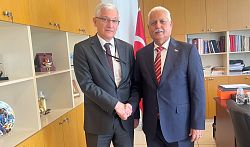
Yemen, Türkiye Discuss Bilateral Relations and Latest Developments
Yemen’s Ambassador to Türkiye, Mohammed Tareq, held talks today with Ahmed Demirer, Director General of the Middle East Department at the Turkish Ministry of Foreign Affairs, on bilateral relations, ways to strengthen cooperation, and the latest developments in Yemen.
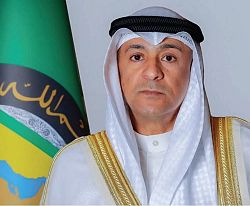
GCC Secretary-General Welcomes UN Security Council’s Position on Houthi Attacks Against Saudi Arabia
The Secretary-General of the Gulf Cooperation Council (GCC) Jasem Albudaiwi has expressed his appreciation for the position conveyed by members of the United Nations Security Council in their presidential statement regarding the attacks carried out by the Houthi terrorist militia against the Kingdom of Saudi Arabia.

Brent Crude Futures Rise 12 Cents
Oil prices remained mostly unchanged in early Asian trading on Thursday following gains from the previous session and a sharp monthly increase.

Al Nassr Beat Al Fateh 3-0 in Saudi Football League
Al Nassr defeated Al Fateh 3-0 in the opening round of the Saudi Pro League, known as the Roshn Saudi League.
Last Update: ،
2026/10/22
Time
11:42:30
Latest News:
 Yemen, Japan Discuss Ways to Strengthen Parliamentary Cooperation
Human Rights Minister Discusses Houthi Violations with UN Human Rights Office
Yemen, Jordan Sign Memorandum of Understanding in Fields of Culture, Heritage
Minister al-Sharjabi Discusses Strengthening EU Cooperation on Water, Environment
President al-Alimi: Houthi Militias Attacks On Civilian Airports Require World's Unity, As It Did Against ..
Latest News:
Yemen, Japan Discuss Ways to Strengthen Parliamentary Cooperation
Human Rights Minister Discusses Houthi Violations with UN Human Rights Office
Yemen, Jordan Sign Memorandum of Understanding in Fields of Culture, Heritage
Minister al-Sharjabi Discusses Strengthening EU Cooperation on Water, Environment
President al-Alimi: Houthi Militias Attacks On Civilian Airports Require World's Unity, As It Did Against ..
FM meets WFP deputy CEO
[02/12/2021 02:08]
Roma -Saba
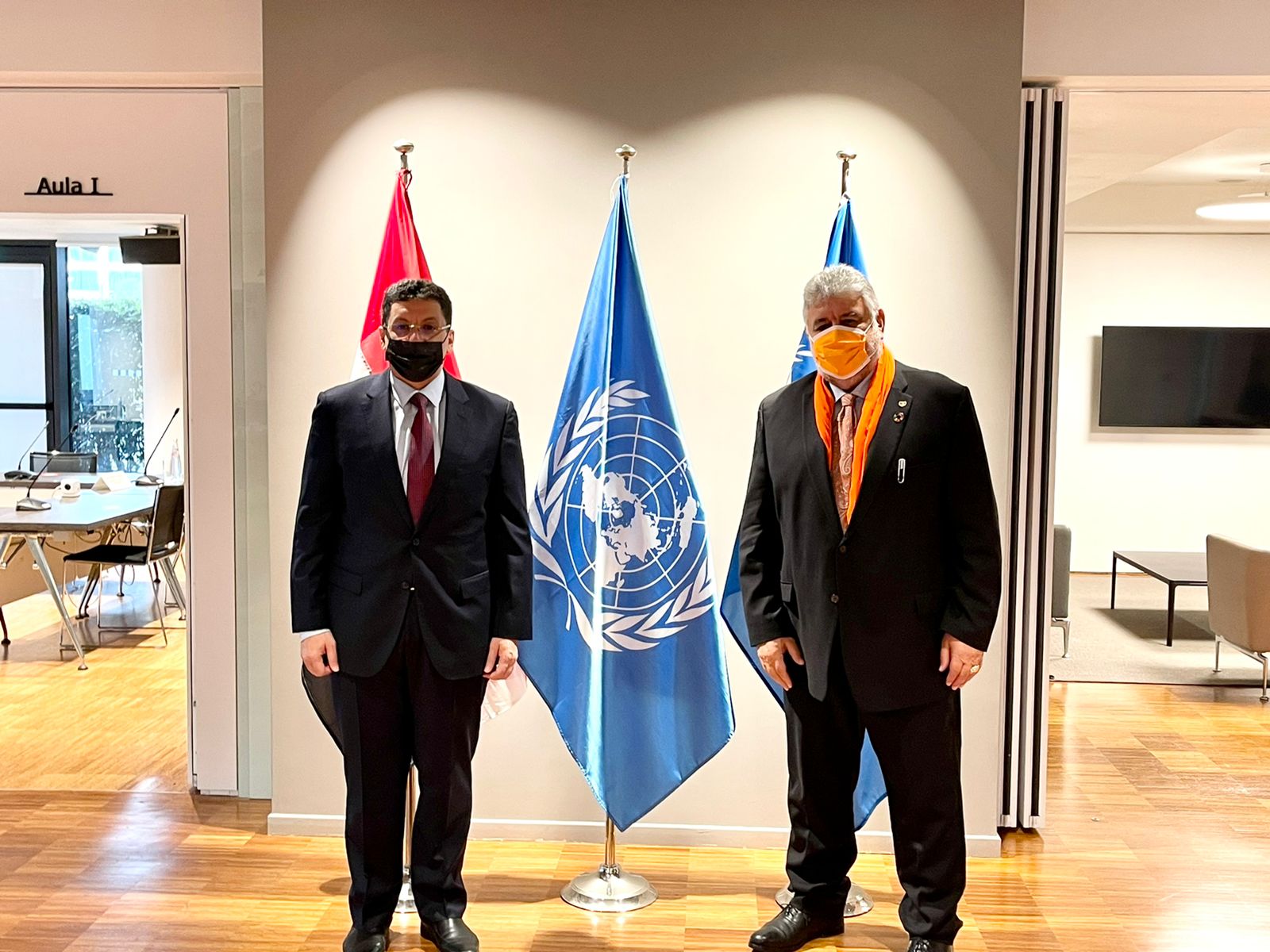
Foreign Minister Dr. Ahmed Awad bin Mubarak, met today, in the Italian capital, Rome, with the Deputy Executive Director of the World Food Program.
During the meeting, they discussed issues of cooperation between Yemen and the program, and the great efforts made by the program to help alleviate the humanitarian catastrophe and improve the humanitarian situation in Yemen.
The Minister stressed the importance of bridging the gap between humanitarian work and development work by implementing humanitarian projects and linking them to development and peace.
He called for expanding the school food aid project based on agriculture and local products implemented by the program in Yemen, in line with the current challenges.
Bin Mubarak warned of the seriousness of the threat that the Safer tanker poses to environmental and food security as a result of the direct impact of any oil spill on the fisheries sector on which millions of Yemenis depend, and the extent of pollution expected to occur if the Houthi militia continues to prevent maintenance of the tanker without facing strong pressures from the International community.
Foreign Minister Dr. Ahmed Awad bin Mubarak, met today, in the Italian capital, Rome, with the Deputy Executive Director of the World Food Program.
During the meeting, they discussed issues of cooperation between Yemen and the program, and the great efforts made by the program to help alleviate the humanitarian catastrophe and improve the humanitarian situation in Yemen.
The Minister stressed the importance of bridging the gap between humanitarian work and development work by implementing humanitarian projects and linking them to development and peace.
He called for expanding the school food aid project based on agriculture and local products implemented by the program in Yemen, in line with the current challenges.
Bin Mubarak warned of the seriousness of the threat that the Safer tanker poses to environmental and food security as a result of the direct impact of any oil spill on the fisheries sector on which millions of Yemenis depend, and the extent of pollution expected to occur if the Houthi militia continues to prevent maintenance of the tanker without facing strong pressures from the International community.
Key words:
Saba Foreign - International - environmental - humanitarian - implementing - agriculture - maintenance - cooperation - catastrophe - development -
Yemen, Türkiye Discuss Bilateral Relations and Latest Developments
Yemen, Japan Discuss Ways to Strengthen Parliamentary Cooperation
Human Rights Minister Discusses Houthi Violations with UN Human Rights Office
President al-Alimi: Houthi Militias Attacks On Civilian Airports Require World's Unity, As It Did Against ISIS, Al-Qaeda
Houthi Shelling Injures Two Civilians, Sets Factory Ablaze in Taiz
Yemen, Austria Discuss Strengthening Bilateral Cooperation
Houthi Militias Responsible for 109 Crimes, Violations in 48 Hours in Taiz
Human Rights Minister Discusses Houthi Violations with German Foreign Ministry Official
President al-Alimi Calls for International Efforts to Designate Houthi Militia as Terrorist Organization
Yemeni Ambassador Discusses Escalating Houthi Threats with US Assistant Secretary of State