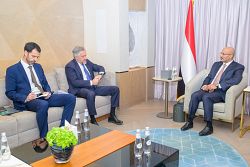
Tareq Saleh Meets EU Ambassador
Member of the Presidential Leadership Council, Tareq Saleh met Thursday with the European Union Ambassador to Yemen Patrick Simonnet.
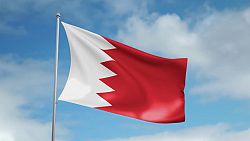
Bahrain Says Air Defenses Intercepted and Destroyed Several “Treacherous” Iranian Air Attacks
The General Command of the Bahrain Defence Force announced on Thursday that Iran continues what it described as a systematic hostile approach through missile and drone attacks targeting civilians in the Kingdom of Bahrain.

Oil price tops $100 a barrel
Oil prices jumped above $100 per barrel today, Monday, as the U.S. Navy prepares to take control of ship movements in the Strait of Hormuz.

Paris Saint-Germain Crowned UEFA Champions League Winners
French club Paris Saint-Germain claimed the UEFA Champions League title after defeating Arsenal 4-3 in a penalty shootout following a 1-1 draw in the final held at Puskás Aréna in the Hungarian capital, Budapest.
Last Update: ،
2026/06/12
Time
11:22:21
Latest News:
 Al-Mahrami Meets EU Ambassadors, Calls for Designating Houthi Militias Terrorist Organization
Prime Minister Reviews Support for Government Reforms, Expansion of Development Partnership with the ..
Yemen reiterates its absolute rejection of using its territory as a platform to threaten international ..
Parliament Speaker Discusses General Situation on the National Scene With Prime Minister
Prime Minister Receives Spanish Secretary of State for Foreign, Global Affairs
Latest News:
Al-Mahrami Meets EU Ambassadors, Calls for Designating Houthi Militias Terrorist Organization
Prime Minister Reviews Support for Government Reforms, Expansion of Development Partnership with the ..
Yemen reiterates its absolute rejection of using its territory as a platform to threaten international ..
Parliament Speaker Discusses General Situation on the National Scene With Prime Minister
Prime Minister Receives Spanish Secretary of State for Foreign, Global Affairs
SP, US Ambassador Discuss Latest Developments on National Arena
[15/05/2025 03:38]
CAIRO-SABA
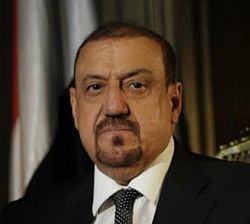
Speaker of the Parliament, Sheikh Sultan al-Barkani, met with the US Ambassador to Yemen, Steven Fagin, via video conference to discuss the latest developments on the national and regional fronts.
Al-Barkani expressed his desire for the efforts to eliminate the Houthi-Iranian project to continue to end their dominance in Yemen and the region.
The Speaker reviewed several issues and challenges facing Yemen, including the humanitarian crisis and economic deterioration resulting from the Houthi militia's continued aggression.
He emphasized the importance of supporting the government's efforts to address these challenges.
Al-Barkani also discussed the Palestinian issue, highlighting the need for regional and international efforts to achieve justice for the Palestinian people and establish an independent state with Jerusalem as its capital.
For his part, Ambassador Fagin said the US is committed to Yemen's security, stability, and constitutional legitimacy.
Fagin also announced that the US administration is working on restoring the Cairo Castle in Taiz Governorate as part of its efforts to preserve Yemen's cultural heritage.
Speaker of the Parliament, Sheikh Sultan al-Barkani, met with the US Ambassador to Yemen, Steven Fagin, via video conference to discuss the latest developments on the national and regional fronts.
Al-Barkani expressed his desire for the efforts to eliminate the Houthi-Iranian project to continue to end their dominance in Yemen and the region.
The Speaker reviewed several issues and challenges facing Yemen, including the humanitarian crisis and economic deterioration resulting from the Houthi militia's continued aggression.
He emphasized the importance of supporting the government's efforts to address these challenges.
Al-Barkani also discussed the Palestinian issue, highlighting the need for regional and international efforts to achieve justice for the Palestinian people and establish an independent state with Jerusalem as its capital.
For his part, Ambassador Fagin said the US is committed to Yemen's security, stability, and constitutional legitimacy.
Fagin also announced that the US administration is working on restoring the Cairo Castle in Taiz Governorate as part of its efforts to preserve Yemen's cultural heritage.
Key words:
constitutional - administration - deterioration - international - government's - developments - humanitarian - highlighting - independent - Governorate -
Yemen reiterates its absolute rejection of using its territory as a platform to threaten international navigation
Prime Minister Receives Spanish Secretary of State for Foreign, Global Affairs
President al-Alimi: No Lasting Peace Without Disarming Militias
Yemen Reaffirms Commitment to Rights of Persons with Disabilities
Planning Ministry, UNICEF Review Framework for New Country Programme
Yemen Denounces Iranian Missile and Drone Strikes on Kuwait, Bahrain, and Jordan
Al-Muharrami Meets Senior Spanish Diplomatic Delegation
President al-Alimi: Peace in Yemen Begins with Ending the Iranian Regime’s Agenda, Restoring National State Institutions
Prime Minister Receives Message from Chinese President to PLC Chairman on 70th Anniversary of Bilateral Relations
Prime Minister Receives Indian Ambassador, Stresses Need to Convene Joint Committee