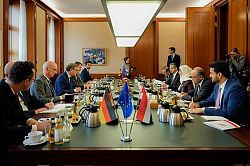
German Chancellor Receives Letter from President al-Alimi
Foreign Minister and Expatriate Affairs Dr. Afrah al-Zouba delivered a written message from Presidential Leadership Council Chairman Dr. Rashad al-Alimi to German Chancellor Friedrich Merz.
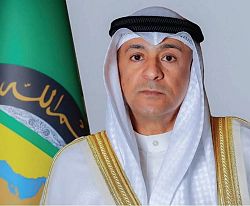
GCC Secretary-General Welcomes UN Security Council’s Position on Houthi Attacks Against Saudi Arabia
The Secretary-General of the Gulf Cooperation Council (GCC) Jasem Albudaiwi has expressed his appreciation for the position conveyed by members of the United Nations Security Council in their presidential statement regarding the attacks carried out by the Houthi terrorist militia against the Kingdom of Saudi Arabia.

Brent Crude Futures Rise 12 Cents
Oil prices remained mostly unchanged in early Asian trading on Thursday following gains from the previous session and a sharp monthly increase.

Al Nassr Beat Al Fateh 3-0 in Saudi Football League
Al Nassr defeated Al Fateh 3-0 in the opening round of the Saudi Pro League, known as the Roshn Saudi League.
Last Update: ،
2026/11/04
Time
07:54:58
Latest News:
 Yemen Calls for Stronger International Partnership and Investment in Water Sector
Ministers of Civil Service, Information, Local Administration Swear-in Before President al-Alimi
President al-Alimi, Lebanese President Discuss Bilateral Relations, Common Challenges
Yemen Participates in the 23rd Session of Executive Bureau of Arab Information Ministers
Foreign Minister Informs Journalists in Paris About Foreign Experts Role in Backing Houthi Terrorist ..
Latest News:
Yemen Calls for Stronger International Partnership and Investment in Water Sector
Ministers of Civil Service, Information, Local Administration Swear-in Before President al-Alimi
President al-Alimi, Lebanese President Discuss Bilateral Relations, Common Challenges
Yemen Participates in the 23rd Session of Executive Bureau of Arab Information Ministers
Foreign Minister Informs Journalists in Paris About Foreign Experts Role in Backing Houthi Terrorist ..
Separatists must comply with Riyadh Agreement or bear responsibility, says Yemen FM
[12/05/2020 03:15]

ADEN-SABA
Yemen's Foreign Minister said the separatist Southern Transitional Council must comply with the Riyadh Agreement it signed with the government last November or bear responsibility for what will arise from their persistence with rebellion.
In a press statement, Mohammed al-Hadhrami said, "The Government kept acting and responding so positively with the Riyadh Agreement but the STC, on the other hand, was so stubborn to sidestep it, continue the armed rebellion, undermine the state institutions and lastly disrupt the mission of the national health team tasked with fighting coronavirus in Aden."
"The STC did not limit its escalation to refusing the calls of the government, the Arab Coalition and the UN Security Council to back off its reckless declaration of self-rule in the south," al-Hadhrami noted, "it even started destabilizing the security of Socotra archipelago and began a provocative amassing of troops in Abyan governorate."
The minister called on the STC to withdraw from its rebellion or face all the responsibilities consequent upon its actions.
"The national army will do all it takes to preserve the state and the security of the nation," he said.
Key words:
responsibilities - responsibility - destabilizing - SABA Yemen's - institutions - Transitional - coronavirus - archipelago - governorate - persistence -
German Chancellor Receives Letter from President al-Alimi
Yemen Calls for Stronger International Partnership and Investment in Water Sector
Ministers of Civil Service, Information, Local Administration Swear-in Before President al-Alimi
President al-Alimi, Lebanese President Discuss Bilateral Relations, Common Challenges
Yemen Participates in the 23rd Session of Executive Bureau of Arab Information Ministers
Foreign Minister Informs Journalists in Paris About Foreign Experts Role in Backing Houthi Terrorist Militias
Taiz Governor Chairs Emergency Committee Meeting to Discuss Service, Humanitarian, Security Issues
Macron Receives Message from President al-Alimi on Yemen
President al-Alimi: Iran’s Revolutionary Guard Directly Involved in Managing the Houthis’ War
Lahj Official Calls for Urgent Oxfam Intervention to Support Displaced Families