Yemen, China Discuss Development and Humanitarian Cooperation
Minister of Planning and International Cooperation Mohammed al-Faqmi held talks on Tuesday via video conference with Chinese Chargé d’Affaires to Yemen Zhao Zheng on strengthening bilateral development and humanitarian cooperation.
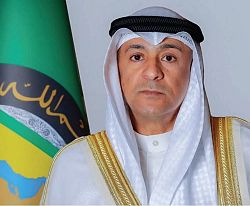
GCC Secretary-General Welcomes UN Security Council’s Position on Houthi Attacks Against Saudi Arabia
The Secretary-General of the Gulf Cooperation Council (GCC) Jasem Albudaiwi has expressed his appreciation for the position conveyed by members of the United Nations Security Council in their presidential statement regarding the attacks carried out by the Houthi terrorist militia against the Kingdom of Saudi Arabia.

Brent Crude Futures Rise 12 Cents
Oil prices remained mostly unchanged in early Asian trading on Thursday following gains from the previous session and a sharp monthly increase.

Al Nassr Beat Al Fateh 3-0 in Saudi Football League
Al Nassr defeated Al Fateh 3-0 in the opening round of the Saudi Pro League, known as the Roshn Saudi League.
Last Update: ،
2026/10/27
Time
04:36:28
Latest News:
 Yemen, China Discuss Development and Humanitarian Cooperation
President al-Alimi Calls on Europe to Designate Houthis as Terrorist Organization
Report Documents Houthi Violations Against 107 Women and Children in Taiz
Yemenia Aircraft Makes Safe Landing in Jordan After Hail Strike
Coalition Intercepts and Destroys Four Drones and Three Ballistic Missiles Launched by Houthis Toward ..
Latest News:
Yemen, China Discuss Development and Humanitarian Cooperation
President al-Alimi Calls on Europe to Designate Houthis as Terrorist Organization
Report Documents Houthi Violations Against 107 Women and Children in Taiz
Yemenia Aircraft Makes Safe Landing in Jordan After Hail Strike
Coalition Intercepts and Destroys Four Drones and Three Ballistic Missiles Launched by Houthis Toward ..
YJS holds Houthis responsible for detainees' deteriorated health
[01/04/2017 01:52]
Sana'a (Saba)- The Yemeni Journalists Syndicate (YJS) has held the militias of the Houthi-Saleh coup responsible for the deteriorated health of the detained journalists held inside their custodies.
A member of the Yemeni Journalists Syndicate's council Nabil al-Osaidi told the Yemeni News Agency (Saba) that YJS obtained information that the journalist Tawfeeq al-Mansouri's health has extremely deteriorated.
Al-Osaidi spelt out that al-Mansouri is suffering from heart illness, shortness of breath, prostatic hyperplasia, citing that these diseases paralyzed his movement and that he is still without any health care.
The other journalists held at custodies of the Houthi-Saleh militias suffer from bad detention conditions, al-Osaidi added.
Al-Osaidi demanded to immediately take al-Mansouri to hospital to be treated and release all detainees, shouldering the Houthi-Saleh militias responsible for torture, mistreatment and deprivation of being treated or visited by their families.
He called all organizations interested in freedom of expression, particularly the international Federation of Journalists and Federation of Arab Journalists, to express solidarity with the detained journalists and put pressures on the militias to release them.
A member of the Yemeni Journalists Syndicate's council Nabil al-Osaidi told the Yemeni News Agency (Saba) that YJS obtained information that the journalist Tawfeeq al-Mansouri's health has extremely deteriorated.
Al-Osaidi spelt out that al-Mansouri is suffering from heart illness, shortness of breath, prostatic hyperplasia, citing that these diseases paralyzed his movement and that he is still without any health care.
The other journalists held at custodies of the Houthi-Saleh militias suffer from bad detention conditions, al-Osaidi added.
Al-Osaidi demanded to immediately take al-Mansouri to hospital to be treated and release all detainees, shouldering the Houthi-Saleh militias responsible for torture, mistreatment and deprivation of being treated or visited by their families.
He called all organizations interested in freedom of expression, particularly the international Federation of Journalists and Federation of Arab Journalists, to express solidarity with the detained journalists and put pressures on the militias to release them.
Key words:
organizations - international - mistreatment - particularly - deteriorated - deprivation - responsible - Syndicate's - journalists - Journalists -
Green Climate Fund Approves Project Worth $28 Million to Develop 'CWIMEWS' in Yemen
Yemen, China Discuss Development and Humanitarian Cooperation
Report Documents Houthi Violations Against 107 Women and Children in Taiz
Coalition Intercepts and Destroys Four Drones and Three Ballistic Missiles Launched by Houthis Toward Saudi Arabia
Berlin Protest Calls for Lifting Taiz Siege, Designating Houthis as Terrorists
Yemen’s Human Rights Ministry Warns of Humanitarian Catastrophe in Taiz
Al-Barkani Informs Chairman of Pakistan's National Assembly on Developments in Yemen
Yemen Participates in 17th Session of Arab Ministerial Water Council
Houthi Shelling Kills Child in Southern Taiz
Aden Governor Discusses Humanitarian Cooperation and Sustainable Development Projects with UN OCHA