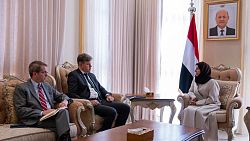
Foreign Minister Praises U.S. Support for Yemeni Government
Minister of Foreign Affairs and Expatriates Dr. Afriah al-Zouba met today, Thursday, with U.S. Embassy Charge d' Affaires to Yemen Neil Hopp and discussed the ongoing developments and the implications of Houthi escalation as well as Yemeni-American bilateral cooperation and support for the Yemeni government and its institutions.
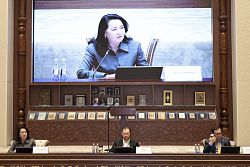
Second Day of International Media Forum on Islamic Civilization Kicks Off in Tashkent
The second day of the International Media Forum “Islamic Civilization: A New Perspective – New Discoveries” commenced today, Wednesday, at the Center for Islamic Civilization in the Uzbek capital, Tashkent.

Brent Crude Futures Rise 12 Cents
Oil prices remained mostly unchanged in early Asian trading on Thursday following gains from the previous session and a sharp monthly increase.

Al Nassr Beat Al Fateh 3-0 in Saudi Football League
Al Nassr defeated Al Fateh 3-0 in the opening round of the Saudi Pro League, known as the Roshn Saudi League.
Last Update: ،
2026/10/01
Time
10:04:11
Latest News:
 Dr. al-Alimi Confers with British Ambassador over Bilateral Cooperation
Cabinet Approves Executive Measures for Fulfilling General Mobilization, Appreciates Saudi Support
Yemen Ambassador Discusses with Jordanian Official Ways to Enhance Cooperation
President al-Alimi: Militias Started This War, But Armed Forces Will End It in Way Meets Aspirations ..
Heavy Fighting Erupts Across Taiz Fronts as Government Forces Inflict Losses on Houthis
Latest News:
Dr. al-Alimi Confers with British Ambassador over Bilateral Cooperation
Cabinet Approves Executive Measures for Fulfilling General Mobilization, Appreciates Saudi Support
Yemen Ambassador Discusses with Jordanian Official Ways to Enhance Cooperation
President al-Alimi: Militias Started This War, But Armed Forces Will End It in Way Meets Aspirations ..
Heavy Fighting Erupts Across Taiz Fronts as Government Forces Inflict Losses on Houthis
Planning Minister Discusses Humanitarian and Development Plan Priorities with UN Resident Coordinator
[16/02/2026 06:05]
ADEN-SABA
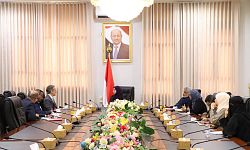
The Minister of Planning and International Cooperation Dr. Afrah al-Zouba met Monday here with the United Nations Resident Coordinator and Humanitarian Coordinator in Yemen Julian Harneis.
The two parties discussed priorities of the humanitarian and development plan and ways to strengthen joint coordination mechanisms in line with current developments.
The meeting was attended by the Deputy Minister of Planning and International Cooperation, Dr. Nizar Basuhaib; the Ministry’s Undersecretary for the International Cooperation Sector, Omar Abdulaziz; the Undersecretary for the Projects Sector, Eng. Wazira al-Shormani and the Country Director of OCHA office in Yemen Karen Bwan.
The Discussions addressed coordination mechanisms between the government and the United Nations, activating the Joint Permanent Coordination Committee, and the importance of aligning humanitarian interventions with national requirements and priorities to meet the needs of all Yemenis across the country.
Minister Al-Zouba stressed the importance of ensuring that the upcoming framework be a joint document built on consultation and full alignment with government priorities, reflecting the executive plans for both the humanitarian and development tracks.
She emphasized that the Ministry of Planning and International Cooperation should play a central role in coordinating with all ministries and UN organizations to ensure program integration and avoid duplication.
The Minister noted that humanitarian affairs fall within the government’s responsibilities, stressing that the current situation differs from previous years and requires closer coordination and a genuine partnership.
She also underscored the need for UN agencies, including the United Nations Development Programme (UNDP), to present their plans and programs in coordination with the Ministry of Planning to ensure alignment with identified needs.
Sectoral coordination, she said, should take place through working groups that include relevant ministers and specialized organizations at both the recommendation level and in actual decision-making participation.
The meeting reviewed ways to address the funding shortfall crisis and mobilize the necessary resources to implement priority programs, while strengthening donors’ roles in supporting early recovery plans. Focus areas include vital sectors such as health, education, water and sanitation, food security, as well as economic infrastructure and enhancing the resilience of local communities.
Minister al-Zouba reaffirmed the government’s commitment to developing joint working mechanisms with UN agencies to achieve integration between the humanitarian and development tracks and ensure that support is directed toward sustainable projects.
She also pointed to the government’s orientation toward comprehensive reform plans, highlighting the importance of data and information exchange with international partners, facilitating the work of organizations, including training, and activating relevant government institutions.
The meeting also addressed the file of detained UN and international organization staff in Sana’a, where the Minister expressed the government’s concern for the safety of humanitarian workers and the importance of ensuring a secure environment for them.
For his part, the UN Resident Coordinator reaffirmed the United Nations’ commitment to continuing support for the Yemeni government in implementing its humanitarian and development plans and strengthening partnerships with various national entities to ensure aid reaches the most vulnerable groups.
He emphasized achieving tangible and sustainable impact in improving livelihoods and basic services, and confirmed the UN’s readiness to expand its programs in line with government priorities to support recovery and reconstruction efforts.
Key words:
responsibilities - Undersecretary - government’s - reconstruction - infrastructure - recommendation - participation - comprehensive - strengthening - organizations -
Foreign Minister Praises U.S. Support for Yemeni Government
Dr. al-Alimi Confers with British Ambassador over Bilateral Cooperation
Cabinet Approves Executive Measures for Fulfilling General Mobilization, Appreciates Saudi Support
Yemen Ambassador Discusses with Jordanian Official Ways to Enhance Cooperation
President al-Alimi: Militias Started This War, But Armed Forces Will End It in Way Meets Aspirations of Yemeni People
Heavy Fighting Erupts Across Taiz Fronts as Government Forces Inflict Losses on Houthis
Houthi Summer Camps Recruited 461,000 Students This Year for Sectarian Indoctrination and Combat
Government Sends Letter to SC Warns UN of Houthi Threats to International Civil Aviation
Ambassador Mojawwar: Red Sea Security, Stability Depend on Restoring Yemen’s State Institutions and Sovereignty
State Minister, WHO Discuss Health Response for Displaced People