European Parliament Calls for Designating Houthis Terrorist Organization, Confirms its Support for Yemeni Government
The European Parliament called today, Thursday, on the EU Council to add the Houthi militias to the EU's list of terrorist organizations, emphasizing its support for the internationally recognized Yemeni government and its commitment to Yemen's security, sovereignty and territorial unity.
GCC Secretary-General Welcomes UN Security Council’s Position on Houthi Attacks Against Saudi Arabia
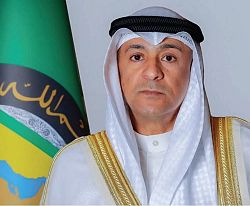
The Secretary-General of the Gulf Cooperation Council (GCC) Jasem Albudaiwi has expressed his appreciation for the position conveyed by members of the United Nations Security Council in their presidential statement regarding the attacks carried out by the Houthi terrorist militia against the Kingdom of Saudi Arabia.
Brent Crude Futures Rise 12 Cents
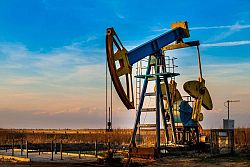
Oil prices remained mostly unchanged in early Asian trading on Thursday following gains from the previous session and a sharp monthly increase.

Al Nassr Beat Al Fateh 3-0 in Saudi Football League
Al Nassr defeated Al Fateh 3-0 in the opening round of the Saudi Pro League, known as the Roshn Saudi League.
Last Update: ،
2026/10/22
Time
09:04:05
Latest News:
 Foreign Minister Delivers Message from President al-Alimi to Chinese President
Houthi Militias Bombard Mosque, School in Jabal Saber, South of Taiz
Yemeni Foreign Minister Warns of Houthi Threats to Regional and International Security
Rasd Organization: 51 Civilians Killed or Injured in Taiz in One Week
Yemen, Türkiye Discuss Bilateral Relations and Latest Developments
Latest News:
Foreign Minister Delivers Message from President al-Alimi to Chinese President
Houthi Militias Bombard Mosque, School in Jabal Saber, South of Taiz
Yemeni Foreign Minister Warns of Houthi Threats to Regional and International Security
Rasd Organization: 51 Civilians Killed or Injured in Taiz in One Week
Yemen, Türkiye Discuss Bilateral Relations and Latest Developments
SOFIA: Climate Change Could Exacerbate Risk of Water Scarcity in Vulnerable Areas in Bulgarian, Scientists Say
[12/03/2024 07:23]

SOFIA-SABA
Bulgaria's water resources are expected to decline as a result of climate change.
This could exacerbate the risk of water scarcity in vulnerable areas and, in years with particularly adverse conditions, elsewhere, said Assoc. Prof. Emil Gachev during an event titled "Is it a myth that Bulgaria is rich in water resources?" which was held in Sofia on Tuesday.
The forum was organized by the Climateka platform on the occasion of World Water Day, March 22, Bulgarian News Agency (BTA), reported.
According to data for the period 1990-2018, Bulgaria's freshwater resource is about 100 billion cubic metres per year.
"This is a bit deceptive, because three-quarters are transit waters of the Danube. The internal runoff on the territory of the country is about 25% of the total amount," Gachev said, adding that there is unevenness of the runoff - it varies from 10 to 30 billion cubic metres per year depending on rainfall.
The main use of water in the past in Bulgaria was in industry and irrigated agriculture, but after the crisis in these two sectors, the use of water resources has decreased from over 14 to 5-6 billion cubic meters.
To date, most of Bulgaria's water use goes to industry, with much smaller shares going to agriculture, forestry and drinking water.
According to Assoc. Prof. Gachev's data, about 100 litres per day is the water consumption per person in households in Bulgaria.
He added that the determination of water losses is usually difficult, but 55-60% of water in Bulgaria is lost in the process of delivery to consumers, with some estimates as high as 70%. In Germany, these losses are estimated at 3 to 5%, according to BTA
Bulgaria's water resources are expected to decline as a result of climate change.
This could exacerbate the risk of water scarcity in vulnerable areas and, in years with particularly adverse conditions, elsewhere, said Assoc. Prof. Emil Gachev during an event titled "Is it a myth that Bulgaria is rich in water resources?" which was held in Sofia on Tuesday.
The forum was organized by the Climateka platform on the occasion of World Water Day, March 22, Bulgarian News Agency (BTA), reported.
According to data for the period 1990-2018, Bulgaria's freshwater resource is about 100 billion cubic metres per year.
"This is a bit deceptive, because three-quarters are transit waters of the Danube. The internal runoff on the territory of the country is about 25% of the total amount," Gachev said, adding that there is unevenness of the runoff - it varies from 10 to 30 billion cubic metres per year depending on rainfall.
The main use of water in the past in Bulgaria was in industry and irrigated agriculture, but after the crisis in these two sectors, the use of water resources has decreased from over 14 to 5-6 billion cubic meters.
To date, most of Bulgaria's water use goes to industry, with much smaller shares going to agriculture, forestry and drinking water.
According to Assoc. Prof. Gachev's data, about 100 litres per day is the water consumption per person in households in Bulgaria.
He added that the determination of water losses is usually difficult, but 55-60% of water in Bulgaria is lost in the process of delivery to consumers, with some estimates as high as 70%. In Germany, these losses are estimated at 3 to 5%, according to BTA
Key words:
SABA Bulgaria's - According - determination - particularly - consumption - resources?" - agriculture - households - conditions - exacerbate -
GCC Secretary-General Welcomes UN Security Council’s Position on Houthi Attacks Against Saudi Arabia
Second Day of International Media Forum on Islamic Civilization Kicks Off in Tashkent
International Media Forum in Tashkent Spotlights Media’s Role in Showcasing Islamic Civilization
International Media Forum IN Uzbekistan Starts Tomorrow With 300 Journalists From 50 Countries
Center For Islamic Civilization And Uzbekistan University Of Journalism Sign Joint Program To Create Media Platform For Young Journalists
Israeli Occupation Forces Arrest 130 Palestinian Women and Girls
10 Palestinians Killed in Gaza as Israeli Forces Arrest Palestinian Minister
UN Warns of Consequences of Rising Violence, Settlement Activity in West Bank
Helicopter Crashes While Fighting Wildfire in Utah
Gaza Death Toll Rises to 73,375, Health Authorities Say