Yemeni Foreign Minister Warns of Houthi Threats to Regional and International Security
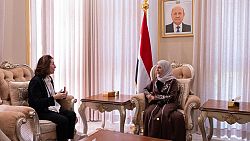
Foreign Minister Dr. Afrah al-Zouba discussed developments in Yemen and ways to strengthen French support for the Yemeni government and enhance bilateral political and security cooperation with French Ambassador to Yemen Véronique Vouland-Aneini on Thursday.

GCC Secretary-General Welcomes UN Security Council’s Position on Houthi Attacks Against Saudi Arabia
The Secretary-General of the Gulf Cooperation Council (GCC) Jasem Albudaiwi has expressed his appreciation for the position conveyed by members of the United Nations Security Council in their presidential statement regarding the attacks carried out by the Houthi terrorist militia against the Kingdom of Saudi Arabia.

Brent Crude Futures Rise 12 Cents
Oil prices remained mostly unchanged in early Asian trading on Thursday following gains from the previous session and a sharp monthly increase.

Al Nassr Beat Al Fateh 3-0 in Saudi Football League
Al Nassr defeated Al Fateh 3-0 in the opening round of the Saudi Pro League, known as the Roshn Saudi League.
Last Update: ،
2026/10/22
Time
02:32:12
Latest News:
 Rasd Organization: 51 Civilians Killed or Injured in Taiz in One Week
Yemen, Türkiye Discuss Bilateral Relations and Latest Developments
Yemen, Japan Discuss Ways to Strengthen Parliamentary Cooperation
Human Rights Minister Discusses Houthi Violations with UN Human Rights Office
Yemen, Jordan Sign Memorandum of Understanding in Fields of Culture, Heritage
Latest News:
Rasd Organization: 51 Civilians Killed or Injured in Taiz in One Week
Yemen, Türkiye Discuss Bilateral Relations and Latest Developments
Yemen, Japan Discuss Ways to Strengthen Parliamentary Cooperation
Human Rights Minister Discusses Houthi Violations with UN Human Rights Office
Yemen, Jordan Sign Memorandum of Understanding in Fields of Culture, Heritage
Workshop on evaluating Yemen's commitments on fighting corruption held
[09/12/2019 05:38]

ADEN-SABA
The Supreme National Authority for Combatting Corruption (SNACC) along with Civil Society Organizations have organized Monday a workshop on evaluating Yemen's international commitments for combating corruption.
The workshop held Monday, which marks the International Anti-Corruption Day December 9 every year.
Participated by 35 concerned officials, the workshop tackled most significant challenges and difficulties facing efforts of state and community in combating corruption.
The Chairwoman of SNACC Judge AfrahBaduwailan confirmed Yemen's commitment to international agreement for combating corruption and keenness of the authority on including civil society in limiting corruption and avoiding it.
"Celebrating the International Anti-Corruption Day coincides with meetings of the 18th round of the conference of the countries and parties in the international agreement for combating corruption scheduled on this December," said Baduwailan, adding Yemen will participate in this conference.
She stressed the significance of the real and active partnership between parties of the national bodies for dignity led by monitoring and judiciary authorities, the government, CSOs, media outletsand international donor organizations.
Key words:
"Celebrating - Participated - AfrahBaduwailan - Organizations - International - international - organizations - difficulties - significance - partnership -
Yemeni Foreign Minister Warns of Houthi Threats to Regional and International Security
Rasd Organization: 51 Civilians Killed or Injured in Taiz in One Week
Yemen, Türkiye Discuss Bilateral Relations and Latest Developments
Yemen, Japan Discuss Ways to Strengthen Parliamentary Cooperation
Human Rights Minister Discusses Houthi Violations with UN Human Rights Office
Yemen, Jordan Sign Memorandum of Understanding in Fields of Culture, Heritage
Minister al-Sharjabi Discusses Strengthening EU Cooperation on Water, Environment
President al-Alimi: Houthi Militias Attacks On Civilian Airports Require World's Unity, As It Did Against ISIS, Al-Qaeda
Houthi Shelling Injures Two Civilians, Sets Factory Ablaze in Taiz
Yemen, Austria Discuss Strengthening Bilateral Cooperation