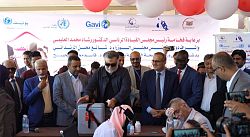
Health Minister Launches Emergency National Measles, Rubella Vaccination Campaign
Minister of Public Health and Population Dr. Qasim Buhaibeh officially launched an emergency national vaccination campaign against measles and rubella in Aden, in cooperation with the World Health Organization (WHO), UNICEF, and Gavi.
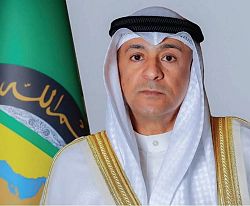
GCC Secretary-General Welcomes UN Security Council’s Position on Houthi Attacks Against Saudi Arabia
The Secretary-General of the Gulf Cooperation Council (GCC) Jasem Albudaiwi has expressed his appreciation for the position conveyed by members of the United Nations Security Council in their presidential statement regarding the attacks carried out by the Houthi terrorist militia against the Kingdom of Saudi Arabia.

EU Allocates 525 Million Euros to Support Startups in Chip Design
European Commissioner for Technological Sovereignty, Security and Democracy, Hana Verkonen, announced that the European Union (EU) has allocated 525 million euros to support startups in the field of chip design.

Al Nassr Beat Al Fateh 3-0 in Saudi Football League
Al Nassr defeated Al Fateh 3-0 in the opening round of the Saudi Pro League, known as the Roshn Saudi League.
Last Update: ،
2026/11/08
Time
09:27:10
Latest News:
 Foreign Minister Meets Yemeni Community Representatives in Germany
Yemenis Protest Outside White House and Congress, Demand End to Houthi Siege of Taiz
Coalition Intercepts and Destroys Houthi Cruise Missile Targeting Riyadh
Minister of Information Confers with British Ambassador over Media Cooperation
Amb. al-Wuhayshi Updades Russian Deputy Foreign Minister on Developments in Yemen
Latest News:
Foreign Minister Meets Yemeni Community Representatives in Germany
Yemenis Protest Outside White House and Congress, Demand End to Houthi Siege of Taiz
Coalition Intercepts and Destroys Houthi Cruise Missile Targeting Riyadh
Minister of Information Confers with British Ambassador over Media Cooperation
Amb. al-Wuhayshi Updades Russian Deputy Foreign Minister on Developments in Yemen
President al-Alimi: Targeting al-Mokha Port Demonstrates Militias' Systematic War on Yemeni People's Vital Resources
[09/08/2026 04:09]
RIYADH - SABA
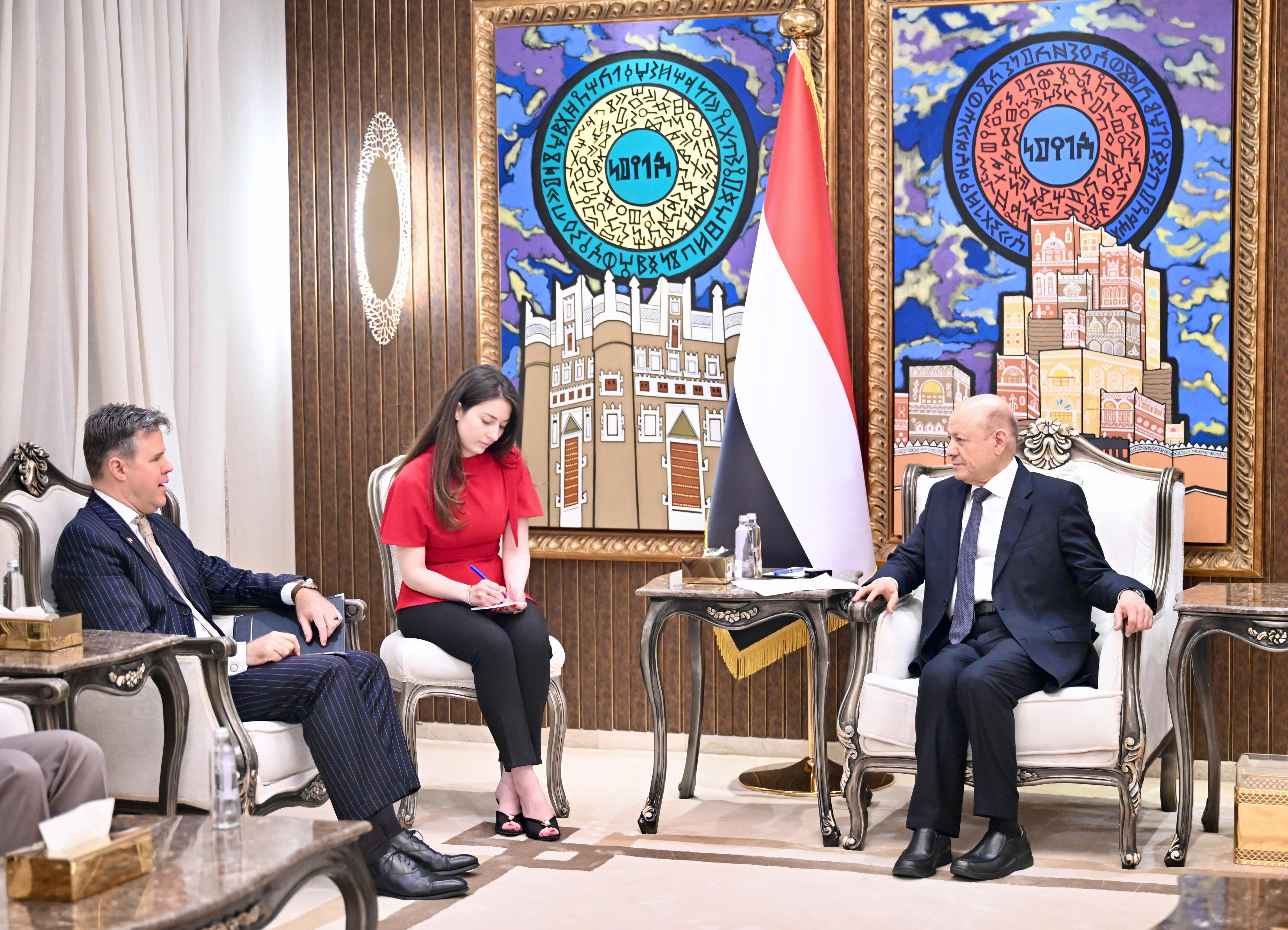
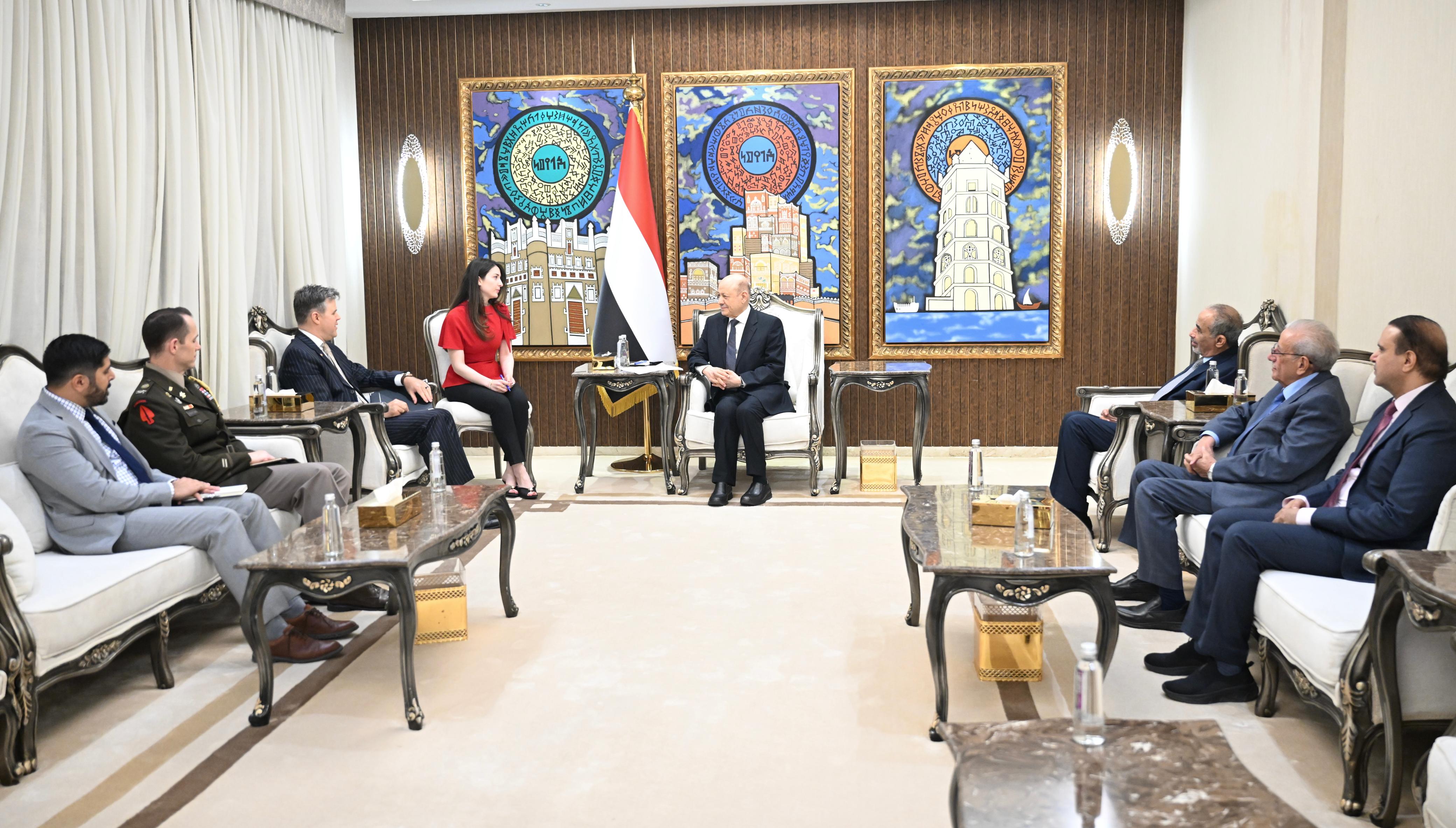
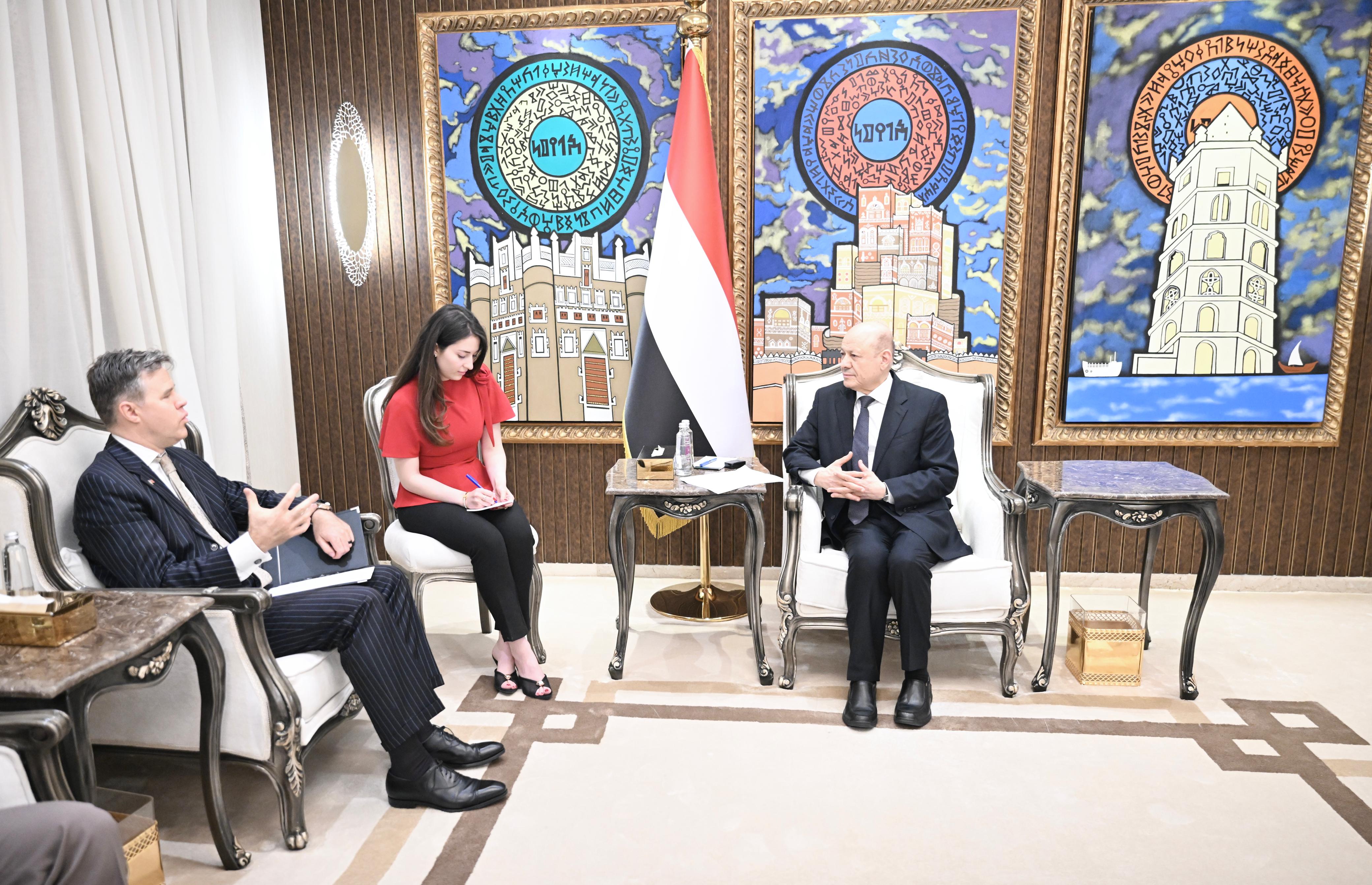
His Excellency President Dr. Rashad al-Alimi, Chairman of the Presidential Leadership Council (PLC) received today, Sunday, the Chargé d' Affaires of the U.S. Embassy in the Republic of Yemen Neil Hob.
They conferred over the Yemeni-American bilateral relations and ways to futher promote the bilateral cooperation.
The President welcomed the newly appointed American diplomat, promising him every support he may need to do his diplomatic job, further boost the friendship and partnership relations between the two countries.
The President voiced gratitude and high appreciation for the American role in supporting the Yemeni government, protecting regional security, ensuring freedom of international navigation and combating terrorism.
He stated that he is looking forward to a greater Yemeni-American partnership in the upcoming stage.
President al-Alimi briefed the American diplomat on the rapidly unfolding developments in the Yemeni national arena, including the Houthi terrorist missiles and drones attack today on al-Mokha port on the western coast of Taiz governorate.
He described today's attack as a new escalation and aggression targeting one of the vital ports for the Yemeni people, saying "targeting the al-Mokha port, just days after attacks on armed forces sites, displacement camps, civilian properties and attempts to target ships and national facilities, confirms that the Houthi militias are carrying out a systematic war aimed at the resources of the Yemeni people, their lifelines and economic outlets".
The President added that the Houthi militias, who claim there is a siege on the militias-controlled areas, they are targeting ports, airports and economic facilities today, threatening commercial ships and supplies of food and fuel.
It is a deliberate attempt to strangle the Yemeni people and their decent livelihoods and to increase their humanitarian suffering, he stressed.
The Chairman of the PLC confirmed that targeting a vital seaport near Bab al-Mandeb is an extension of Iran’s escalation approach, which affects economic facilities, maritime routes, and the interests of the region’s countries.
It also once again proves the danger of leaving missile, drone and specialized weapon capabilities outside state control, he remarked.
The President emphasized that this escalation places the international community, especially the United States, in a clear responsibility to protect the Yemeni people's right to safe access to their ports, airports and vital facilities.
He said "This actually calls for moving from merely containing the Houthi threat to addressing its sources and tools, and supporting Yemen’s State institutions and their ability to safeguard their lands, waters and citizens’ interests".
The President made it clear that what’s happening in the region once again confirms that the problem isn’t in separate crises, but in a single source of instability, which is based on the use of armed groups outside State institutions to achieve cross-border goals.
President al-Alimi reiterated the government’s support for any diplomatic effort that reduces tension and prevents wars in the region.
However, he warned that any agreements that don’t clearly and sustainably address the threat of Iranian militias, their military capabilities, funding and their threat to regional countries, will only postpone the crisis instead of solving it.
Al-Alimi made it crystal clear that sustainable security in the region cannot be built while armed groups remain able to make decisions about war, launch missiles and drones and threaten international routes.
The president considered that peace and deterrence are not contradicting options, saying that successful diplomacy requires an environment that prevents rogue parties from thinking that escalation will bring them illegitimate gains.
The PLC pointed out that recent developments confirm the danger of armed groups continuing to possess cross-border capabilities, and that protecting civil, economic and maritime facilities is a shared regional and international responsibility.
The President noted that the Yemeni government has made major concessions for many years to ease the suffering of citizens, while the militias have continued to develop their military capabilities, threaten cities and maritime routes, undermine state institutions, and increasingly link Yemen to the Iranian regime's agenda.
He asserted that this group does not view peace as an end in itself, but rather as an opportunity to reposition themselves.
The Houthis should not gain incentives through blackmail after failing to achieve them by force, and that any understandings in the region should end with national states that exclusively hold legitimate power and constitutional institutions representing all their citizens, al-Alimi stressed.
The PLC stated that recent developments on the ground have proven that State institutions and its armed forces have become more capable, cohesive and coordinated, and that continued attacks will not come without political and field costs.
the President urged the United States and the international community to move from a policy of managing the Houthi threat to addressing its causes and sources of strength, by maintaining political, economic and diplomatic pressure on the militias and their backers. On the other hand by strengthening the capacities of the government and State institutions to protect their land, waters and the interests of their citizens.
The stronger the Yemeni State is, the less capable Iran and extremist groups will be of using Yemen as a platform to threaten the region and the world, he remarked.
Key words:
understandings - responsibility - government’s - constitutional - international - contradicting - strengthening - President - capabilities - developments -
Presidential Leadership Council: 'Yemen Dawn' Steadily Moving Toward Achieving Its Goals
Ministers of Civil Service, Information, Local Administration Swear-in Before President al-Alimi
President al-Alimi, Lebanese President Discuss Bilateral Relations, Common Challenges
President al-Alimi: Iran’s Revolutionary Guard Directly Involved in Managing the Houthis’ War
Republican Decree Appointing Officials in Transport Ministry Issued
Republican Decree Announces Cabinet Reshuffle in Dr. Shaya Zindani’s Government
Presidential Leadership Council Reaffirms Commitment to Continue Fajr Al-Yemen Operation Until All Objectives Are Achieved
Governor of Al-Jawf Swears-in Before Chairman of Presidential Leadership Council
Two Republican Decrees Appointing Governors for al-Bayda and al-Jawf Issued
President al-Alimi Sends Message of Condolences to King of Spain on Victims of Train Collision