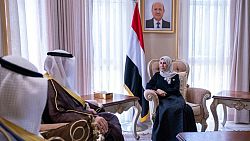
Foreign Minister Discusses with Kuwaiti Ambassador Latest Developments
Minister of Foreign Affaires and Expatriates Dr. Afrah al-Zouba discussed with Kuwaiti Ambassador to Yemen Falah Al-Mutairi bilateral relations, developments in Yemen and ways to strengthen political, humanitarian, and development cooperation.
Second Day of International Media Forum on Islamic Civilization Kicks Off in Tashkent
The second day of the International Media Forum “Islamic Civilization: A New Perspective – New Discoveries” commenced today, Wednesday, at the Center for Islamic Civilization in the Uzbek capital, Tashkent.

Gold Rises Over 1 Percent
Gold prices rose more than one percent today, Thursday, as investors digested the U.S. interest rate hike and hints of further monetary tightening, while the rally in oil prices came to a halt.

Al Nassr Beat Al Fateh 3-0 in Saudi Football League
Al Nassr defeated Al Fateh 3-0 in the opening round of the Saudi Pro League, known as the Roshn Saudi League.
Last Update: ،
2026/09/30
Time
12:57:17
Latest News:
 Al-Arada Inaugurates Information Technology College Building, Lays Foundation Stone for College of Administrative ..
Foreign Minister: Government Very Keen To Further Promote Friendship Relations With China
Foreign Minister Discusses With UK Ambassador Houthi Escalation, Strengthening International Support ..
Foreign Minister Receives Credentials of French Ambassador
Acting Chinese Ambassador Reiterates Beijing's Stance in Support of Presidential Leadership Council, ..
Latest News:
Al-Arada Inaugurates Information Technology College Building, Lays Foundation Stone for College of Administrative ..
Foreign Minister: Government Very Keen To Further Promote Friendship Relations With China
Foreign Minister Discusses With UK Ambassador Houthi Escalation, Strengthening International Support ..
Foreign Minister Receives Credentials of French Ambassador
Acting Chinese Ambassador Reiterates Beijing's Stance in Support of Presidential Leadership Council, ..
Government team discussed with World Bank delegation ways to strengthen partnership expand development projects
[30/03/2026 06:56]
ADEN – SABA
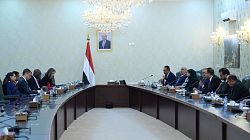
A meeting held Monday chaired by Minister of Planning and International Cooperation and Yemen’s Governor to the World Bank Dr. Afrah al-Zouba and attended by a high-level World Bank delegation led by the Bank’s Vice President for the Middle East, North Africa, Afghanistan and Pakistan Ousmane Dione discussed ways to enhance partnership and expand support across development, humanitarian, service, and economic sectors in the country.
The meeting, which included a number of ministers, addressed the World Bank’s key projects across several sectors, which include contributions to improving service, financial and economic conditions, strengthening institutional support and capacity building.
Key initiatives include public financial reviews, development of financial management systems, the national strategy for managing international trade, enhancing resilience and livelihoods, humanitarian response and nutrition, human capital development, salary assessments, and human resources system reform.
Government representatives reviewed the challenges facing public sectors due to the exceptional circumstances in the country and the resulting economic and service pressures, in addition to the actual needs and requirements submitted by national entities.
They emphasized the importance of aligning these priorities with the World Bank’s strategic partnership framework to ensure sustainable development impact, build national capacities, improve institutional efficiency, and effectively engage qualified national professionals in implementing development programs and projects.
The Minister of Planning and International Cooperation affirmed that the government has approved the general program plan for the current year across all national sectors and has implemented a package of economic and financial reforms reflecting a comprehensive approach based on the national development plan aimed at achieving growth, enhancing recovery, and improving service levels. She stressed the importance of strengthening coordination and partnership with the World Bank in project implementation, as well as in monitoring, evaluation, and impact assessment processes.
For his part, the World Bank’s Vice President for the Middle East, North Africa Afghanistan, and Pakistan emphasized the importance of the existing partnership with Yemen and the Bank’s commitment to continuing its support for the Yemeni government and people across various sectors.
He explained that the Bank’s strategy in Yemen is based on three main pillars: improving nutrition, expanding access to electricity services, and developing agriculture and aquaculture sectors.
The international official reaffirmed the Bank’s commitment to providing technical, operational, and organizational support, strengthening efforts to localize development and humanitarian work, and taking into account the observations and proposals presented by the government within the discussions of the Bank’s Country Partnership Framework meeting, scheduled for next May.
Key words:
representatives - implementation - organizational - Government - contributions - strengthening - international - International - institutional - professionals -
Foreign Minister Discusses with Kuwaiti Ambassador Latest Developments
Al-Arada Inaugurates Information Technology College Building, Lays Foundation Stone for College of Administrative Sciences
Foreign Minister: Government Very Keen To Further Promote Friendship Relations With China
Foreign Minister Discusses With UK Ambassador Houthi Escalation, Strengthening International Support for Government
Foreign Minister Receives Credentials of French Ambassador
Acting Chinese Ambassador Reiterates Beijing's Stance in Support of Presidential Leadership Council, Government
Khunbashi Reviews Efforts to Aid Displaced Families in Hadramout
Humanitarian Agencies Coordinate Response to Displacement
Foreign Minister Discusses Bilateral Cooperation, Red Sea Maritime Security With Chinese Chargé d’Affaires
Minister of Planning Participates in Fourth Yemen-EU Partnership Days in Amman