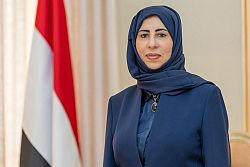
Yemeni, Saudi Foreign Ministers Discuss Developments in Yemen, Region
Minister of Foreign Affairs and Expatriates Dr. Afrah al-Zouba held a phone call on Thursday with Saudi Foreign Minister Prince Faisal bin Farhan Al Saud on developments in Yemen and the region and ways to strengthen joint coordination.

GCC Secretary-General Welcomes UN Security Council’s Position on Houthi Attacks Against Saudi Arabia
The Secretary-General of the Gulf Cooperation Council (GCC) Jasem Albudaiwi has expressed his appreciation for the position conveyed by members of the United Nations Security Council in their presidential statement regarding the attacks carried out by the Houthi terrorist militia against the Kingdom of Saudi Arabia.

Brent Crude Futures Rise 12 Cents
Oil prices remained mostly unchanged in early Asian trading on Thursday following gains from the previous session and a sharp monthly increase.

Al Nassr Beat Al Fateh 3-0 in Saudi Football League
Al Nassr defeated Al Fateh 3-0 in the opening round of the Saudi Pro League, known as the Roshn Saudi League.
Last Update: ،
2026/10/30
Time
08:58:23
Latest News:
 Yemen Calls on Security Council to Take Strong Measures to Stop Houthi Attacks on Aden International ..
Yemen, UK Discuss Humanitarian and Development Cooperation
Aden Airport Resumes Operations After Houthi Shelling
Yemeni Ambassador Urges US Action on Taiz Siege
President al-Alimi Sends Message of Condolences to King of Spain on Victims of Train Collision
Latest News:
Yemen Calls on Security Council to Take Strong Measures to Stop Houthi Attacks on Aden International ..
Yemen, UK Discuss Humanitarian and Development Cooperation
Aden Airport Resumes Operations After Houthi Shelling
Yemeni Ambassador Urges US Action on Taiz Siege
President al-Alimi Sends Message of Condolences to King of Spain on Victims of Train Collision
Tariq Saleh calls for empowering the Yemeni gov't to enforce its control over the country's seashores
[27/02/2024 06:30]

LONDON - SABA
Member of the Presidential Leadership Council (PLC) Brigadier General Tariq Saleh called for supporting the internationally recognized Yemeni government's capacities in order to effectively exercise its sovereignty over the Yemeni seashores.
" The best and most effective way to ensure the Red Sea security is to enable the official government to effectively control the country's seashores", he said, adding" The PLC and the government are fully committed to the international peace and security principles, categorically rejecting any threats to maritime navigation and civilian shipping lanes", Tariq stressed.
He made his comments during his talks today, Tuesday, in London with the Secretary-General of the International Maritime Organization (IMO) Arsenio Dominguez.
Tariq's talks with Dominguez focused on the increasingly growing risks in the Red Sea due to Iran-backed Terrorist Houthi militias' persistent attacks on the shipping lanes and commercial ships.
They also discussed the urgently needed practical measures to address the looming environmental danger of the cargo ship Rubymar which seriously damaged by the Houthis' missiles attacks.
" International community must assume its responsibly, take necessary measures to protect the Red Sea marine environment and ecosystem", Brig. Tariq noted.
Key words:
internationally - environmental - international - categorically - International - government's - SABA Member - Presidential - increasingly - Organization -
Yemeni, Saudi Foreign Ministers Discuss Developments in Yemen, Region
Yemen Calls on Security Council to Take Strong Measures to Stop Houthi Attacks on Aden International Airport
Yemen, UK Discuss Humanitarian and Development Cooperation
Aden Airport Resumes Operations After Houthi Shelling
Yemeni Ambassador Urges US Action on Taiz Siege
President al-Alimi Sends Message of Condolences to King of Spain on Victims of Train Collision
Taiz Local Authority Calls for Urgent Investigation into Suspected Toxic Shells
Prime Minister Issues Decision to Establish Government Communication Center
Human Access: Thousands of Displaced Yemeni Families Struggle to Rebuild Their Lives
Yemen, FAO Review Food Security and Resilience Project Progress