Houthi Shelling Kills Child in Southern Taiz
A nine-year-old child was killed on Sunday when Iranian-backed Houthi militia shelled villages in Al-Aqroud area, south of Taiz Governorate.

GCC Secretary-General Welcomes UN Security Council’s Position on Houthi Attacks Against Saudi Arabia
The Secretary-General of the Gulf Cooperation Council (GCC) Jasem Albudaiwi has expressed his appreciation for the position conveyed by members of the United Nations Security Council in their presidential statement regarding the attacks carried out by the Houthi terrorist militia against the Kingdom of Saudi Arabia.

Brent Crude Futures Rise 12 Cents
Oil prices remained mostly unchanged in early Asian trading on Thursday following gains from the previous session and a sharp monthly increase.

Al Nassr Beat Al Fateh 3-0 in Saudi Football League
Al Nassr defeated Al Fateh 3-0 in the opening round of the Saudi Pro League, known as the Roshn Saudi League.
Last Update: ،
2026/10/26
Time
06:02:46
Latest News:
 Planning Minister Discusses Strengthening Humanitarian Interventions, Support Projects for Displaced ..
Aden Governor Discusses Humanitarian Cooperation and Sustainable Development Projects with UN OCHA
Aden Governor Discusses Humanitarian Response and Youth Training with UNFPA
Minister of Health Discusses with WFP Nutritional Interventions
Houth Cell, Weapon Shipment in Shabwah, Security Achievement
Latest News:
Planning Minister Discusses Strengthening Humanitarian Interventions, Support Projects for Displaced ..
Aden Governor Discusses Humanitarian Cooperation and Sustainable Development Projects with UN OCHA
Aden Governor Discusses Humanitarian Response and Youth Training with UNFPA
Minister of Health Discusses with WFP Nutritional Interventions
Houth Cell, Weapon Shipment in Shabwah, Security Achievement
Mine Planting..Houthi Crimes against Yemeni People
[19/06/2018 09:47]
Riyadh - Saba
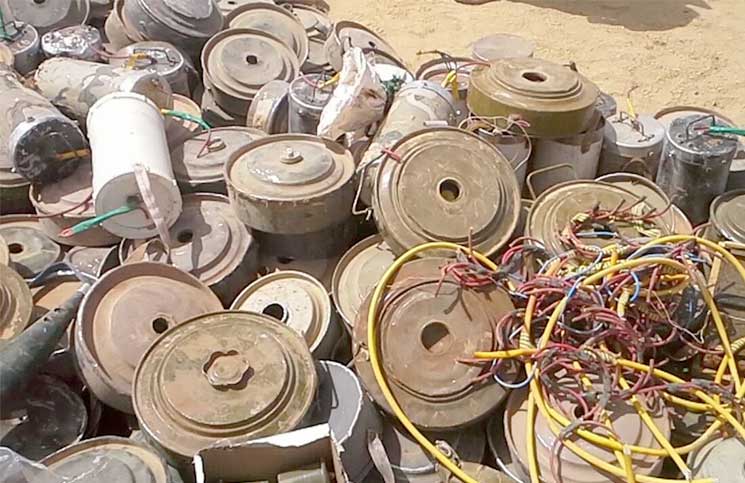
Hardly a day passes without the news of the injury or death of a Yemeni citizen due to mines planted by the Houthi militias after their successive losses against the progress of the legitimate forces supported by Arab coalition. Yemen has become one of the most affected countries of mine planting disaster since the end of the World War II, with a total of half a million mines planted by the militias in the Yemeni cities.
This huge amount of landmines constitutes a sustainable threat to civilian lives, compounded by the Houthi militias' deliberate, indiscriminate and heavy planting of internationally banned mines in the areas where they expelled from, even in homes, roads, and public facilities.
The mines types the Houthis plant varies. Some of them are handmade in the form of rocks if the area is mountainous and in the form of sand clusters, as well as other known mines of all kinds.
The Houthi militias deliberately plant mines and IEDs randomly in the streets, houses, farms of the areas which they are expelled from without taking into account the civilian, children, youth, and the elderly.
According to Local and international human right reports, the Houthi militias planted more than half a million mines in liberated Yemeni provinces, including internationally banned mines that killed hundreds of civilians and caused thousands of permanent disabilities to others. Every day, the damages of Yemenis are doubled and civilians paid the ultimate price. The Houthis have mined land and sea, which deprived farmers and fishermen of practicing their daily work through committing the most heinous crimes of war by outrageous violation of humanitarian law. There are a number of international agreements that regulate or prohibit the use of such landmines and explosive remnants of war.
These agreements are part of international humanitarian law aimed at reducing the effects of armed conflict on humanitarian grounds, including the Anti-Personnel Mine Ban Convention "the 1997 Ottawa Convention" which came into effect in March 1999. In March 2007, 153 countries have already agreed to the terms of the convention or acceded to it. The treaty imposed a total ban on anti-personnel mines after negotiations led by strong and unusual coalition involved a number of governments, UN, and international humanitarian organizations through a network known as (The international Campaign to Ban Landmines). The convention signatories are committed not to use, develop, or produce antipersonnel landmines, and to destroy - within four years - all mine stockpiles and to remove - within ten years - all planed mines.
In return, King Salman Humanitarian Aid And Relief Center continues the implementation of its projects to help Yemeni people to get rid of the Houthi mines and their catastrophic consequences, including the project to support the physical rehabilitation Centers carried out by the international Committee of the Red Cross (ICRC) with more that 10 million dollars.
King Salman Humanitarian Aid and Relief Center pays special attention to the landmines victims of innocent civilians. In addition to medical and therapeutic assistance, the Center provides a project of mine risk educational sessions and psychological support services for children and affected families in order to save the lives of Yemenis, especially children under 5, pregnant and nursing mothers, from the risks of death fields left by the Houthis and the followers of the ousted leader Ali Abdullah Saleh in every area they controlled before being liberated by the National Army and the Popular Resistance Forces with the assistance of the Saudi-led Arab Coalition Forces to support the legitimacy.
Key words:
internationally - Saba Hardly - implementation - rehabilitation - indiscriminate - international - organizations - psychological - antipersonnel - According -
Houthi Shelling Kills Child in Southern Taiz
Aden Governor Discusses Humanitarian Cooperation and Sustainable Development Projects with UN OCHA
Houth Cell, Weapon Shipment in Shabwah, Security Achievement
Interior Ministry: Houthis Target Coast Guard Facilities in Aden With Three Ballistic Missiles
Yemenis in Brussels Urge EU to Press for End to Taiz Siege
Yemen’s Prime Minister Condemns Terrorist Attack on Church in Jordan
Yemen Welcomes Joint Statement by Foreign Ministers of Saudi Arabia, Egypt, Türkiye, Pakistan
Taiz Residents Bury 18 Victims of Houthi Shelling
Spain Says Houthi Attacks on Civilian Infrastructure in Yemen and Saudi Arabia Fuel Regional Escalation
Arab League Condemns Houthi Attacks on Saudi Arabia’s King Fahd International Airport