
Saudi Crown Prince Offers Condolences to Family of Former President Abd-Rabbu Mansour Hadi
Saudi Crown Prince and Prime Minister, Mohammed bin Salman, extended his condolences and sympathies to the family of former Yemeni President Abd-Rabbu Mansour Hadi during a telephone call with Brig. Nasser Abd-Rabbu Mansour Hadi.

Magnitude 5 Earthquake Strikes Fiji Islands in the South Pacific
A magnitude 5.0 earthquake struck south of the Fiji Islands in the South Pacific Ocean on Sunday, according to the United States Geological Survey (USGS). The earthquake occurred at a depth of approximately 486.2 kilometers beneath the Earth's surface.

Oil price tops $100 a barrel
Oil prices jumped above $100 per barrel today, Monday, as the U.S. Navy prepares to take control of ship movements in the Strait of Hormuz.

Paris Saint-Germain Crowned UEFA Champions League Winners
French club Paris Saint-Germain claimed the UEFA Champions League title after defeating Arsenal 4-3 in a penalty shootout following a 1-1 draw in the final held at Puskás Aréna in the Hungarian capital, Budapest.
Last Update: ،
2026/06/01
Time
04:53:35
Latest News:
 Yemen Condemns Iranian Attacks Against Kuwait
Masam Removes 1,609 Mines, Unexploded Ordnance on May Fourth Week
Saudi Defense Minister Delivers Leadership Condolences Following Death of Former President Hadi
Al-Alimi Receives Further Condolences on the Passing of Former President Hadi
UAE Leadership Extends Condolences to Leadership Council Chairman on Passing of Former President
Latest News:
Yemen Condemns Iranian Attacks Against Kuwait
Masam Removes 1,609 Mines, Unexploded Ordnance on May Fourth Week
Saudi Defense Minister Delivers Leadership Condolences Following Death of Former President Hadi
Al-Alimi Receives Further Condolences on the Passing of Former President Hadi
UAE Leadership Extends Condolences to Leadership Council Chairman on Passing of Former President
Project Steering Committee for Livelihoods Support, Food Security held meeting
[28/02/2024 02:20]
ADEN-SABA
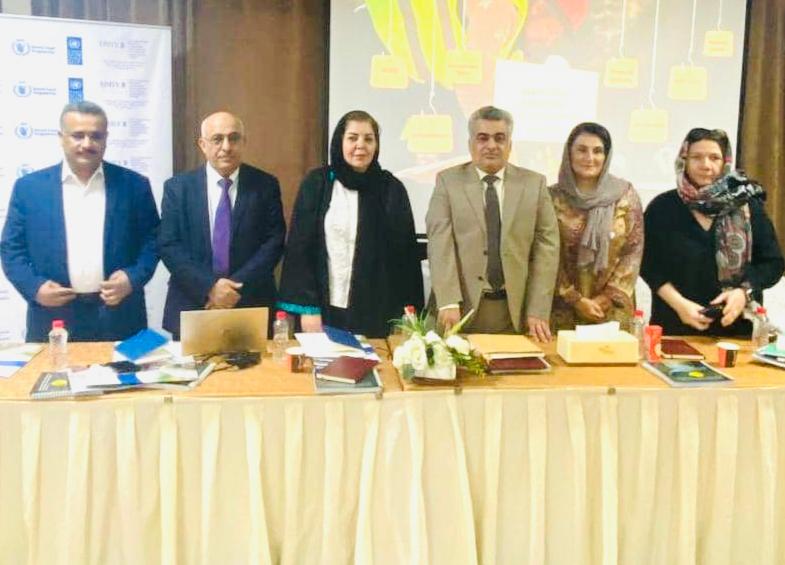
The Project Steering Committee for Livelihoods Support, Food Security, and Climate Adaptation in Yemen (Phase III) held its meeting here on Wednesday.
The meeting was chaired by Deputy Minister of Planning and International Cooperation Dr. Nizar Basuhayb to discuss the implementation of the project funded by the European Union and implemented by the Swedish International Development Cooperation Agency (SIDA) with the support from the United Nations agencies.
Dr. Basuhayb emphasized the importance of the project as one of the economic empowerment initiatives that contribute to improving food security, supporting small farmers, reducing malnutrition, mitigating climate change risks, and serving as a distinguished model for livelihood projects and employment opportunities for farmers.
He also highlighted the project's role in increasing agricultural productivity, empowering youth and women to own agricultural assets, and enhancing technical and vocational skills in rural areas.
Furthermore, Dr. Basuhayb reaffirmed the government's commitment to addressing the economic and livelihood conditions, providing basic services and supporting the agricultural and fisheries sectors in partnership with donors and Yemen's development partners.
He discussed the structural and emerging challenges facing development in Yemen in general, and the agricultural sector in particular, such as water resource scarcity, low agricultural productivity, heavy reliance on food imports (up to 90%), the impact of war and conflict, and Yemen's vulnerability to climate change.
He commended the level of strategic partnership with the European Union and its significant contributions in supporting Yemen in various vital areas, particularly livelihoods, agriculture, food security, women's empowerment, human rights and sustainable peace.
He stressed that the Ministry of Planning prioritizes the agricultural sector and food security in mobilizing external funding to contribute to reducing food insecurity and alleviating the humanitarian crisis affecting 80% of the population. He also highlighted that the agricultural sector contributes for around 20% of the gross domestic product and employs over 60% of the workforce.
For her part, Nadia al-Awamleh, the Deputy Resident Representative of the United Nations Development Program (UNDP), emphasized the economic and social importance of the project and the efforts of UNDP in supporting development in Yemen and transferring from relief to development.
The Project Steering Committee for Livelihoods Support, Food Security, and Climate Adaptation in Yemen (Phase III) held its meeting here on Wednesday.
The meeting was chaired by Deputy Minister of Planning and International Cooperation Dr. Nizar Basuhayb to discuss the implementation of the project funded by the European Union and implemented by the Swedish International Development Cooperation Agency (SIDA) with the support from the United Nations agencies.
Dr. Basuhayb emphasized the importance of the project as one of the economic empowerment initiatives that contribute to improving food security, supporting small farmers, reducing malnutrition, mitigating climate change risks, and serving as a distinguished model for livelihood projects and employment opportunities for farmers.
He also highlighted the project's role in increasing agricultural productivity, empowering youth and women to own agricultural assets, and enhancing technical and vocational skills in rural areas.
Furthermore, Dr. Basuhayb reaffirmed the government's commitment to addressing the economic and livelihood conditions, providing basic services and supporting the agricultural and fisheries sectors in partnership with donors and Yemen's development partners.
He discussed the structural and emerging challenges facing development in Yemen in general, and the agricultural sector in particular, such as water resource scarcity, low agricultural productivity, heavy reliance on food imports (up to 90%), the impact of war and conflict, and Yemen's vulnerability to climate change.
He commended the level of strategic partnership with the European Union and its significant contributions in supporting Yemen in various vital areas, particularly livelihoods, agriculture, food security, women's empowerment, human rights and sustainable peace.
He stressed that the Ministry of Planning prioritizes the agricultural sector and food security in mobilizing external funding to contribute to reducing food insecurity and alleviating the humanitarian crisis affecting 80% of the population. He also highlighted that the agricultural sector contributes for around 20% of the gross domestic product and employs over 60% of the workforce.
For her part, Nadia al-Awamleh, the Deputy Resident Representative of the United Nations Development Program (UNDP), emphasized the economic and social importance of the project and the efforts of UNDP in supporting development in Yemen and transferring from relief to development.
Key words:
Furthermore - implementation - Representative - International - contributions - vulnerability - distinguished - opportunities - government's - productivity -
Saudi Crown Prince Offers Condolences to Family of Former President Abd-Rabbu Mansour Hadi
Yemen Condemns Iranian Attacks Against Kuwait
Masam Removes 1,609 Mines, Unexploded Ordnance on May Fourth Week
Saudi Defense Minister Delivers Leadership Condolences Following Death of Former President Hadi
Al-Alimi Receives Further Condolences on the Passing of Former President Hadi
UAE Leadership Extends Condolences to Leadership Council Chairman on Passing of Former President
Al-Subaihi, PM Receive Condolences in Aden on the Passing of Former President Abd-Rabu Mansour Hadi
President al-Alimi leads funeral procession of former President Abd-Rabu Mansour Hadi
Saudi Leadership Extends Condolences Over Death of Former Yemeni President Abdrabbuh Mansur Hadi
Presidency Mourns Former Yemeni President Field Marshal Abd-Rabbu Mansour Hadi